
In this guide
Give the rectangle a job
If the answer is that dinner moves into a cool room, compare coverage and warmth with a layer that already works for you. If the answer is that a plain kurta needs colour, a narrower stole might do the job with far less fabric to carry. If you need a covering for a particular setting, check how much of the shoulder and upper arm it covers in the way you intend to wear it. Names such as stole, wrap and dupatta can overlap. Length, width and material give you firmer ground for comparison.
Try folding a scarf you own to the candidate dimensions. Place it over both shoulders, then around the neck and then over one arm as you would carry it indoors. Where do the ends land? A beautiful fringe that falls into a meal can become a nuisance. A short wrap that keeps falling off may need an arrangement you do not enjoy. That little rehearsal helps you decide what is a practical minimum for one use and an unnecessary extra for another.
Choose the face you want to show
Look at whether the pattern is similar on the reverse. A single shoulder fold often reveals both sides. If you love a particular embroidered area, make sure it will be visible when the piece is narrowed or wrapped. Examine tassels and edges for places that could catch on a bag strap or jewelry. Ask about the care routine, especially if you expect to take the piece on public transport and clean it regularly.
See whether it earns a place in the bag
Use an existing layer as a stand in and carry it for an afternoon. Do you reach for it as soon as you arrive, or spend the day finding somewhere to put it? If the latter, perhaps you need a lighter accent rather than another warm wrap. Make a short list of the garments it will accompany and check them together in daylight. A piece that comfortably serves two familiar outfits and folds into the bag you already use is often a better companion than a spectacular one that calls for a different bag, a new blouse and someone to hold it whenever you sit down.
Check coverage in the position you need
Measure a rectangle on a table, fold another piece of fabric to that outline and use it as a stand in. For a shoulder covering, put it over both shoulders and reach one arm forward. Does it stay over the upper arms, or does it turn into a narrow strip across the back? For a neck accent, fold the same rectangle lengthwise and try one loose turn. The result may be too bulky even if the full length is ideal. Dimensions and thickness work together.
Ask whether tassels or fringe are part of the quoted length. A long fringe can look beautiful in a photograph yet supply none of the extra coverage you were counting on. Look at the width in particular. Customers often focus on length because it is the larger number, but width determines whether a piece feels like a scarf or a shoulder wrap on your body. Write down the dimensions of the reference that worked for you and carry them to the next listing. You will then know whether a difference of a few inches affects the actual job or merely sounds important when two sets of numbers appear side by side on a screen.
Test the space it takes when put away
A wrap spends at least part of its life not being worn. Fold a similar one the way you normally would and place it in the bag you use for work, dinner or travel. Can you still get your phone out without dragging the fabric across a zip? Does it sit beneath a water bottle or rub against keys? If the piece has delicate work, allow room for a soft protective pouch rather than measuring only the tightly compressed fabric.
Try carrying it over an arm for ten minutes if you do not plan to put it in a bag. Open a door, look at a phone and reach for something on a shelf. If it repeatedly slides off or catches, you may need a different size for everyday use. A decorative piece that stays on the shoulders throughout dinner has a different brief from one that moves in and out of a bag five times during a commute. Decide which description fits your plans. If a large wrap is worth the extra bulk because it keeps you comfortable in a cold room, that is a perfectly good trade. Make the choice knowingly rather than discovering the bulk at the first crowded coat check.
Plan for the places a wrap will touch
A piece worn near the face can meet makeup, perfume or hair products. One carried over the arm may spend time against a chair or the outside of a bag. Check the care instructions with that pattern of use in mind. A special occasion wrap that goes to a cleaner occasionally is one thing. A daily layer that needs the same treatment after frequent wear asks for a different budget and routine.
Inspect the ends and any fringe before putting it away. Store it so the decoration is not hanging under its own weight or catching on nearby jewelry. Follow the label on folding, hanging and pressing rather than assuming that advice for a plain cotton scarf applies to a decorated silk blend. If you are travelling, give it a clean place separate from shoe soles and fasteners. When you return, take it out and look at its condition instead of leaving it compressed until the next trip. These are small habits, but they help determine whether a beautiful textile becomes an easy companion or something you avoid using for fear of damaging it. Choose a maintenance routine you can actually follow, not the one you imagine you might have time for someday.
For a gift, ask which job the recipient needs rather than guessing their favourite colour first. Someone who wants an extra layer at a desk may have little use for a narrow decorative scarf. Someone looking for a bright accent may never carry a bulky shawl. Once you know the job, a colour choice becomes a pleasure instead of an attempt to solve the wrong problem beautifully.
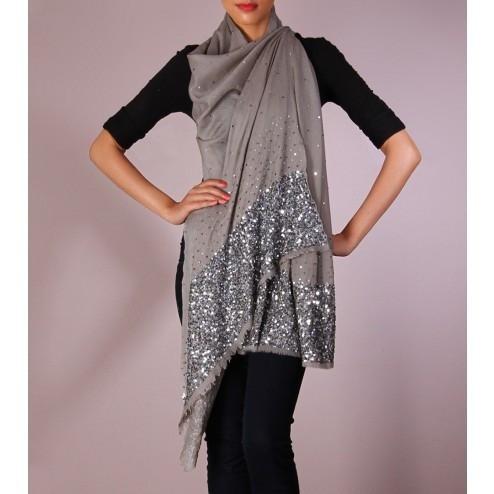 Vuala · Dupattas - WrapsGrey Sequined Cashmere Shawl
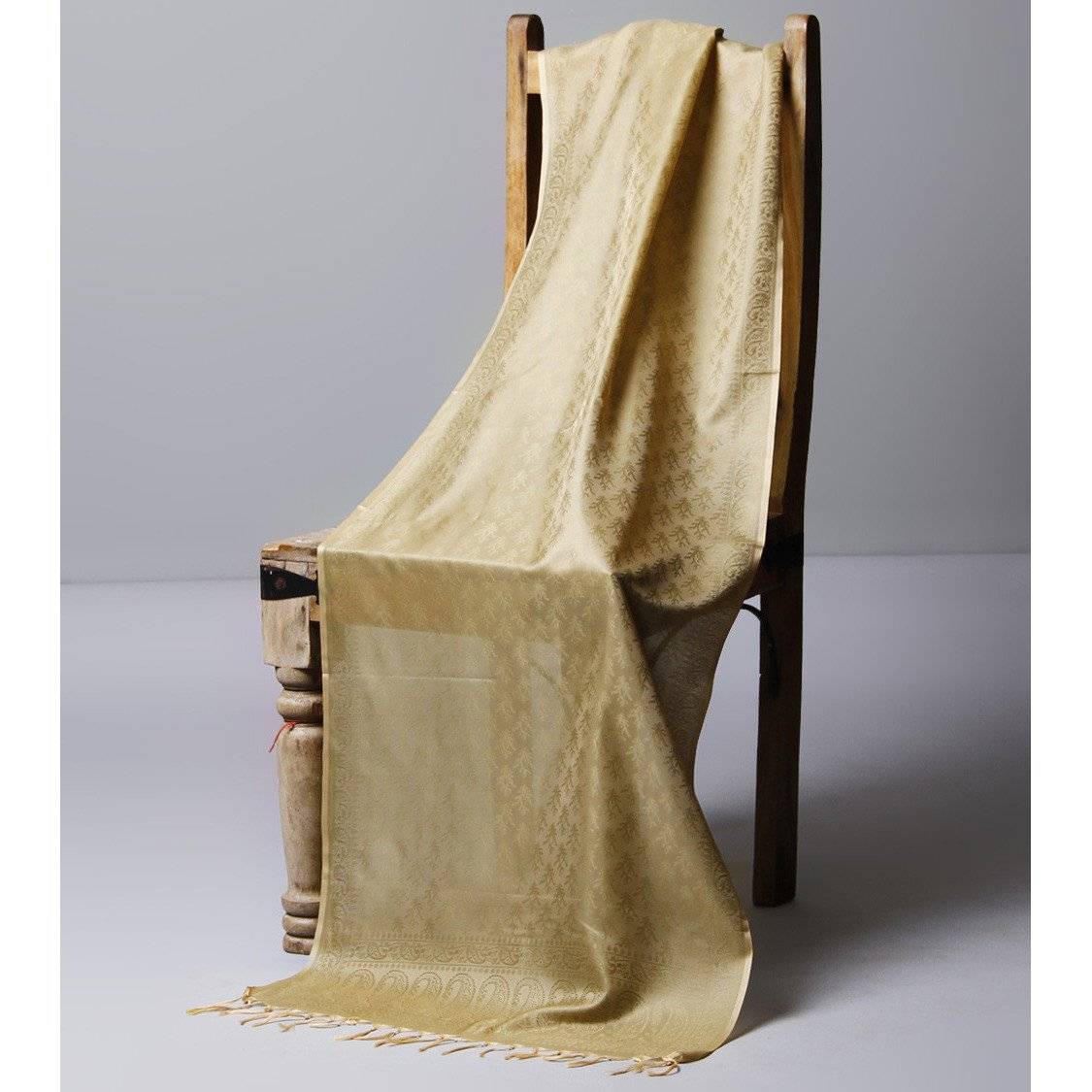 Kehri · Dupattas - WrapsBeige Cotton Silk Stole
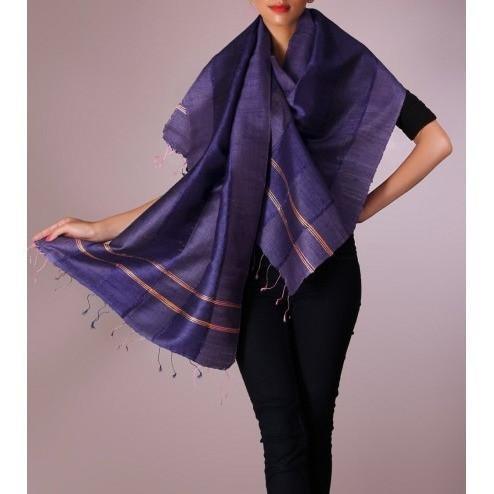 Vuala · Dupattas - WrapsBlue Handwoven Raw Silk Stole
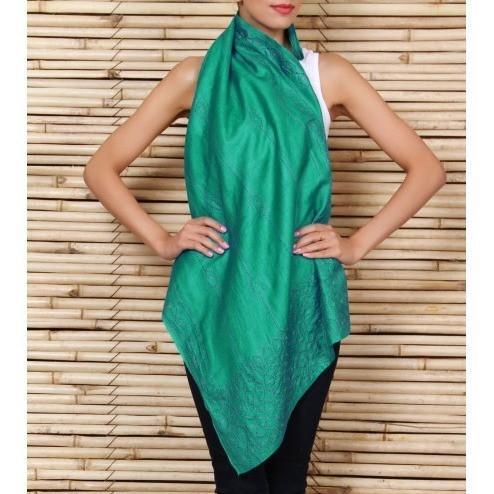 Sadhna · Dupattas - WrapsBlue Silk Stole with Kantha Work