
In this guide
Inventory the set piece by piece
Read the description as though you were checking a packing list. Is there top fabric, bottom fabric and a dupatta? Are the materials listed separately with their lengths and widths? Is a lining included? A picture of a finished model is useful for imagining the look but does not answer those questions. Save the product reference and ask for any missing dimensions before assuming the pictured sleeve or flare is possible in the size you want.
Look for borders, motifs or embroidered panels that have to land in particular places. A plain length can be laid out in more ways than a panel with a fixed neckline or a large central motif. A tailor may need to see the actual design before promising a particular sleeve length or hem shape. If you have your heart set on one cut, ask about feasibility before ordering. A diagram of the fabric with its width and the motif positions is often more valuable than another posed photograph.
Distinguish partly made from ready to wear
Semi stitched can mean that some shaping or decoration is already in place while other seams still need finishing. Ask which seams remain open and what adjustment range is possible. Do not assume that a broad label such as Free Size means the material can produce every cut in every measurement. A long flared top can use much more fabric than a short straight one. Cloth reserved for a border cannot also become a full sleeve without changing the design.
Set the collection date before cutting
Work back from the day you need the outfit, allowing time for delivery, a first fitting and a possible adjustment. An order arriving before the event does not guarantee a finished garment by that date. Ask the tailor for the total cost, including closures, lining and any work needed to finish edges. Keep the receipt and put a note with the leftover material describing what was made. If a cuff or facing needs attention later, that small matching piece can be far more useful than a large collection of unidentified scraps. Most importantly, inspect the delivered fabric before anyone cuts it. A discrepancy is much easier to resolve while all the pieces remain in their original state.
Take the layout to the appointment
Before discussing embellishments, ask the tailor to show you roughly how the main pattern pieces could sit on the cloth. The sleeve may need to run in a particular direction to keep a motif upright. A border intended for the hem may not leave enough continuous length for a matching cuff. Seeing the layout makes it much easier to choose which detail matters most when two ideas compete for the same area.
If the tailor thinks the pictured silhouette is not possible with the supplied dimensions, ask for the nearest workable alternative. A shorter top, a simpler sleeve or a separate coordinating panel may make more sense than trying to stretch the original plan. Get your approval step clear. At what point can the design still change without wasting cut material? Write that point on the fitting note. Agree who will check symmetry and pattern placement before the first cut, especially if the work is being passed from a shop counter to another person. Bring or send an annotated picture if words like left and right could be misunderstood. Describe the side as worn by the person in the garment. That little clarification costs nothing and can protect a feature you chose the whole set for.
Keep a record of the materials as delivered
Open the parcel on a clean surface and identify each piece before separating anything. Photograph the materials together and then photograph the labels with their corresponding lengths. If the set has a coordinating dupatta, look at it beside the top cloth in daylight. A slight difference in texture may be part of the design; a completely unexpected colour or missing component is worth asking about before the set goes to a tailor.
Do not cut off a swatch from a returnable length to go lining shopping. Ask whether the tailor or seller can provide a small spare sample, or take the uncut fabric with you in a protective bag. If lining is needed, put it behind a single layer and then behind a folded section. The result can change the visible colour as well as the opacity. Check the proposed lining’s care needs against those of the outer fabric. A beautifully coordinated set is still inconvenient if its components cannot sensibly be cared for together after construction. Keep the care notes somewhere other than a loose paper label that might be discarded at cutting. Once the garment is finished, you will need to know how to maintain the combination, not just the main fabric in isolation.
Ask for the cost of a finished suit
Ask for a written breakdown of the work rather than a single optimistic estimate for stitching. A basic top, a lined top, a particular neckline, fitted sleeves, closures and finishing an ornate hem may involve different amounts of labour. Find out whether the bottom is included in the quote and whether the dupatta edges need work. A price for stitching only the top cannot fairly be compared with the price of a complete ready set.
Include your own travel and time when the decision is close. Two fittings across town and a collection visit may be quite manageable for one special piece but impractical for a garment you need next week. Ask what happens if the first fitting reveals a change that was not in the original brief. It is easier to agree on that before work starts than when the garment is almost complete. If the total exceeds your budget, simplify a decorative feature before compromising on basic fit or suitable lining. A simple finish that lets the fabric hang properly can look more considered than an elaborate design squeezed into the wrong allowance. Keep a copy of the final quote with your measurements so a future order starts from information rather than memory.
If the set is a gift, ask whether the recipient has access to a tailor and enjoys choosing a cut. A parcel of fabric gives freedom to someone who loves that process but hands another person an unexpected expense and errand. Offering to arrange or contribute to stitching can make a thoughtful difference, provided you check what they would actually find helpful first.
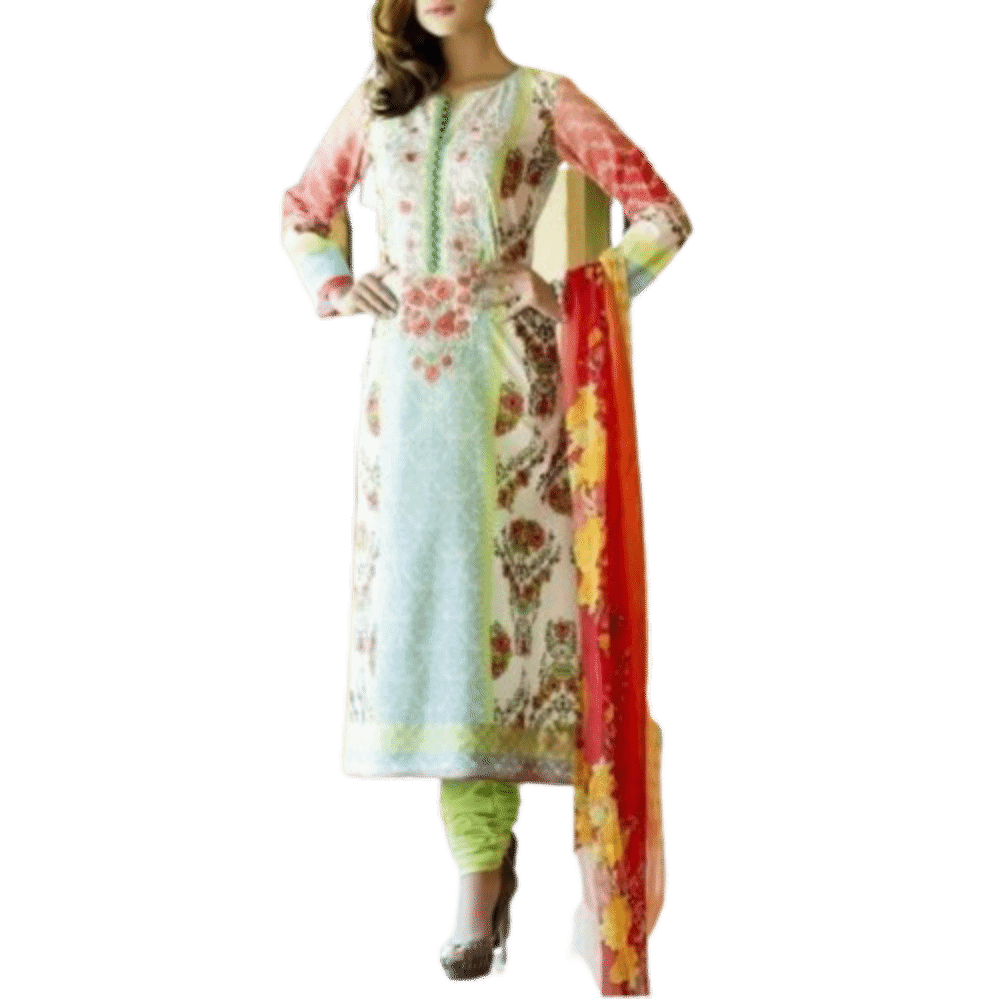 Rohana · Unstitched Salwar KameezCream & Blue Cotton Unstitched Churidar Suit
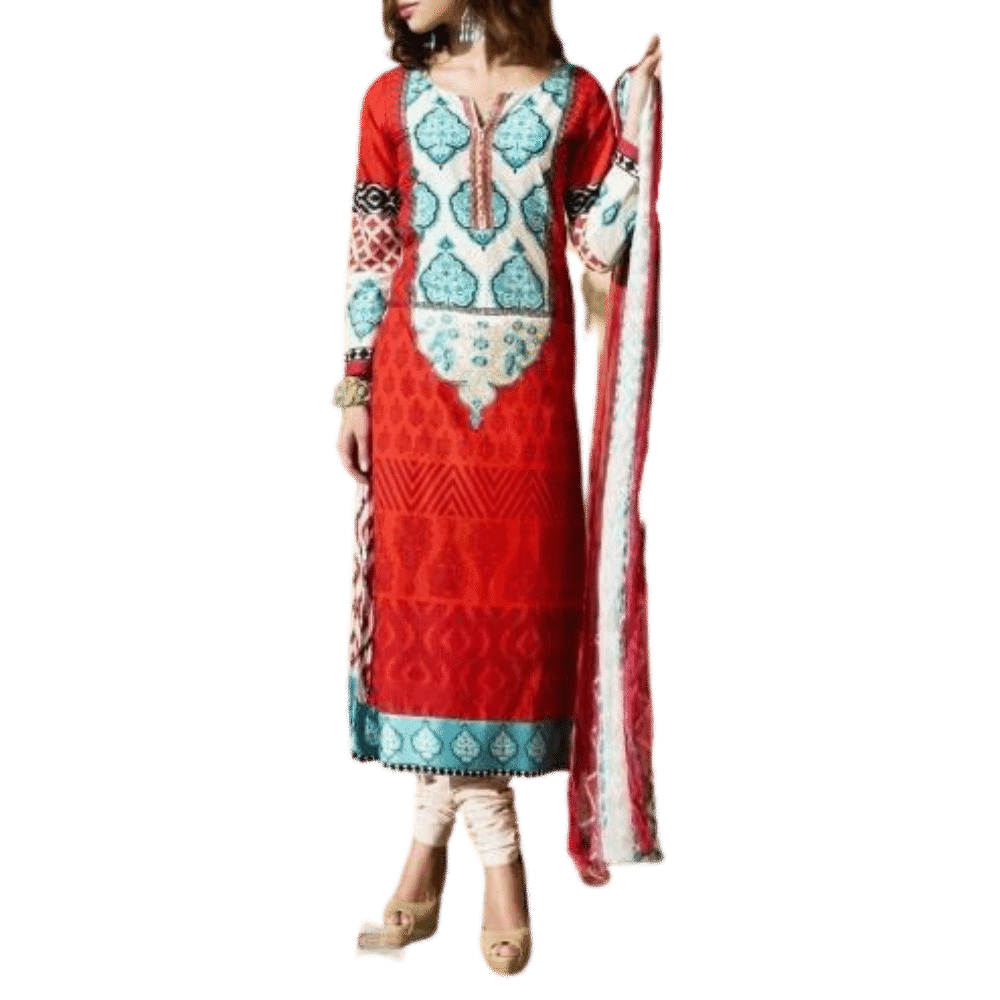 Rohana · Unstitched Salwar KameezMaroon & Cream Cotton Unstitched Churidar Suit
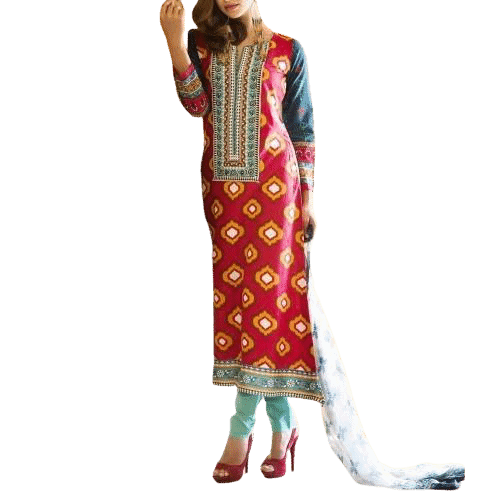 Rohana · Unstitched Salwar KameezMaroon Cotton Unstitched Churidar Suit
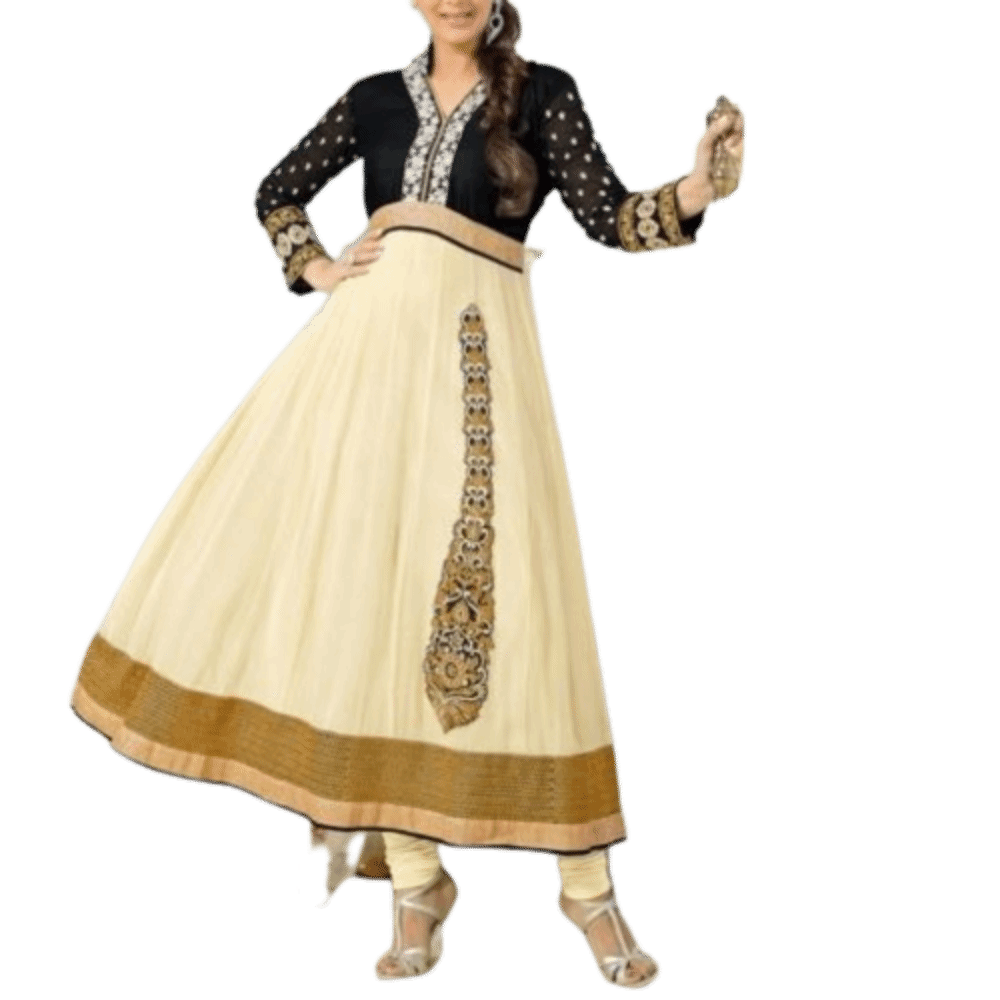 Raas · Unstitched Salwar KameezCream Embroidered Georgette Anarkali Suit