
In this guide
Start with the empty spaces
Dress in the main garment and shoes, with no jewelry or bag, and stand far enough from the mirror to see the full outline. Where is the outfit already busy? A broad saree border over the shoulder occupies a different space from embroidery around a kurta opening. A decorative cuff can be hidden by bangles. A bag carried at the hip can cover the central motif you chose the skirt for. Find one quiet area where you would enjoy an addition. It may be close to your face rather than beside the most ornate section.
Now test one object there. Try earrings against your usual hairstyle or a plain chain against the finished neckline. If the outfit feels complete, stop. A matching set does not have to be worn in its entirety just because its pieces were sold together. Wear the necklace on one occasion and the earrings on another if each makes a more interesting outline by itself. If the first addition disappears, ask why before choosing a larger version. The colour could be too close to the background, or the piece might simply be falling in an area covered by fabric as soon as you turn.
Use the less obvious colour
Look for a colour that occupies a small but visible area of the garment. Perhaps a deep blue line sits beside an otherwise warm print. A blue bag can bring that line forward without needing to match the whole outfit. Another option is to repeat the finish rather than the colour. A softly textured scarf can suit matte cotton even when their hues differ. A glossy necklace can provide a deliberate contrast. Put the items together in daylight and under an ordinary lamp so that you are judging an actual combination, not two separate memories.
Consider how much of each object is seen. A stole on a hanger shows almost all its pattern, while a stole wrapped at the neck may show one narrow stripe. A clutch held against a plain trouser leg tells a different story from the same clutch laid on the garment's embroidered front. Photograph or sketch where the pieces will land. If an accent only looks convincing while both pieces are spread perfectly flat, choose another arrangement. A good colour connection should survive sitting, walking and taking the wrap off when the room becomes warm.
Let dimensions eliminate bad options early
Measure a reference accessory in the way you use it. For a necklace, note the chain length and the drop of any pendant separately. For earrings, start at the piercing and measure to the lowest visible point. For a bag, find the clear opening and usable depth rather than relying on the outside length. A frame with rounded corners can stop a phone going in even when the bag is technically longer than the phone. Put the phone in its normal case for this comparison. An outfit should work without requiring you to dismantle an everyday essential at the door.
The Golden and Silver Zari Clutch in the catalogue is described with a magnetic closure, a chain and outside dimensions. Those details suggest questions worth asking, not a guarantee of capacity. How much space remains with the chain inside? Can the opening clear your phone with room for your fingers? Could the chain rub against a finely woven shoulder? If you are deciding between that sort of bag and a soft sling, rehearse the busiest moment of your event with a similar object. Holding a plate, opening a door or finding a key quickly often settles the choice better than a colour comparison alone.
Check materials where they touch you and the garment
Read the description of an earring post, a necklace clasp or a bracelet lining if you have a known material sensitivity. A colour name such as silver does not necessarily identify the metal in contact with your skin. Likewise, a handbag with an embroidered exterior can have an entirely different texture on the underside of its strap. Inspect those contact points before wearing the items with fine cloth. A rough fitting that looks small on a table can repeatedly catch the same area of a saree as you walk.
Do not experiment with harsh polish or an improvised coating to make an unfamiliar finish behave like something it is not. Follow the care information for the specific piece and ask when the material is unclear. Keep each necklace or earring pair separate from pins and sharp bag fittings when you put everything away. Give a soft wrap a place where tassels are not trapped under a heavy object. The finishing touches you will reach for most often are usually the ones you can take out ready to wear without detangling, polishing or hunting for a missing back.
Borrow a piece of string to sketch a prospective necklace length before you order. Mark the stated chain length on the string, bring its ends together loosely and use a paper shape to represent the pendant. The result is not a model of the weight, but it will quickly show whether the pendant disappears inside the neckline.
Buy the missing job, not the final photograph
Imagine owning only one of the candidates tomorrow. Which problem would it solve? A sling might free both hands for a family gathering. A wrap might let you use a sleeveless piece in a cool hall. Earrings might make a familiar kurta feel special without needing new clothes. Put the most useful answer first, then ask where else the object would work. Name a second outfit that is actually in your wardrobe, not one you hope to buy in order to justify this purchase.
For the final comparison, dress as you expect to arrive and as you expect to leave. If shoes or a layer change during the evening, decide where the removed item goes. Give yourself enough room for an earring case or folded wrap if that is essential. Then leave the mirror and spend a few minutes doing something else while dressed. The detail you still enjoy when you come back, without having spent those minutes holding it in place, has passed a far better test than matching a photograph. It is a finishing touch you can live in rather than one you must continually arrange.
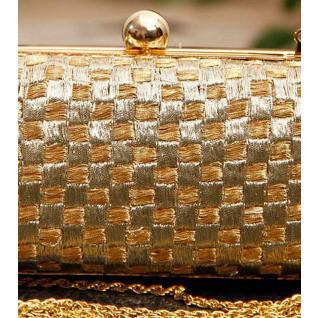 Klick by RG · ClutchGolden & Silver Zari Clutch
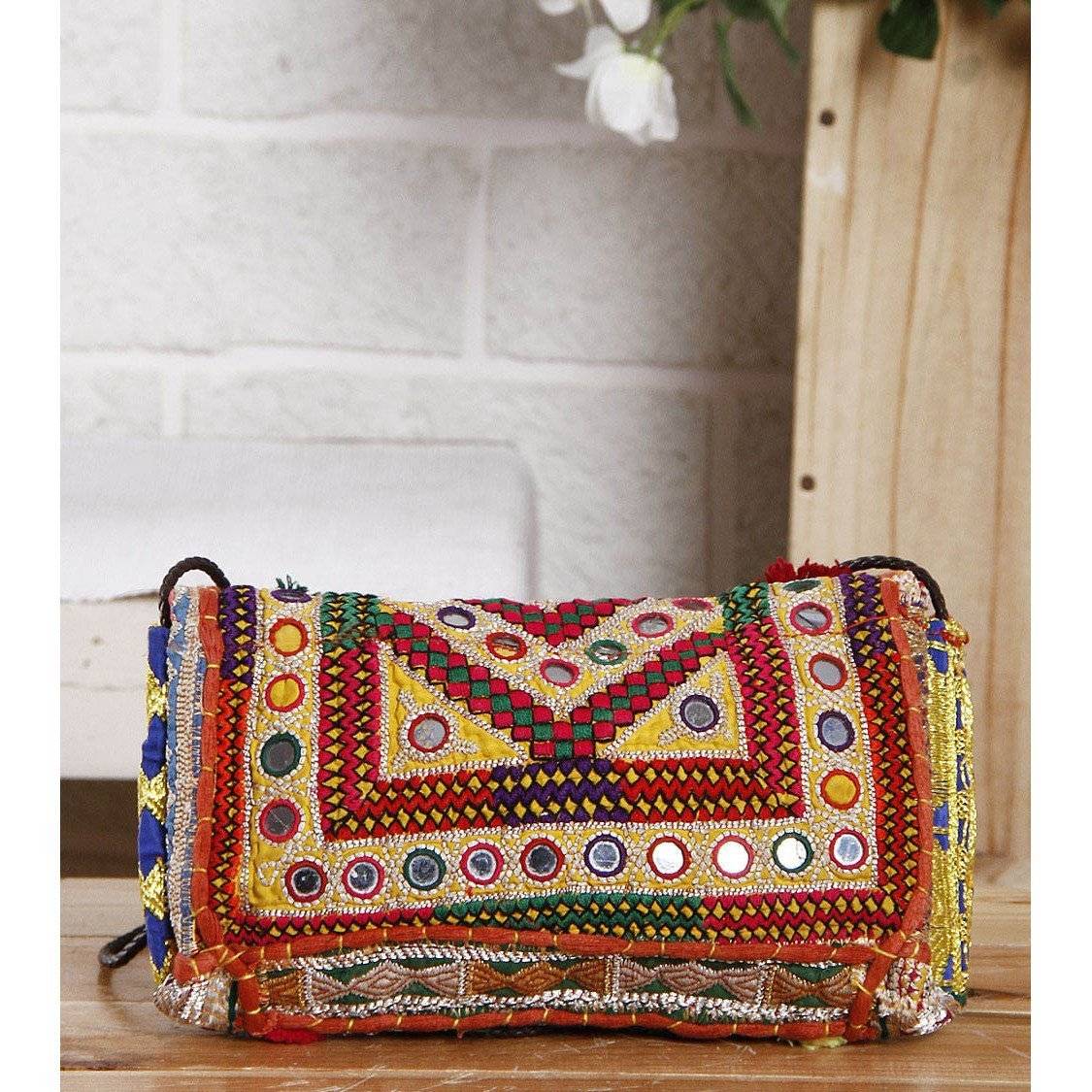 Indie Trunk · ClutchMulticoloured Embroidered Afghani Clutch
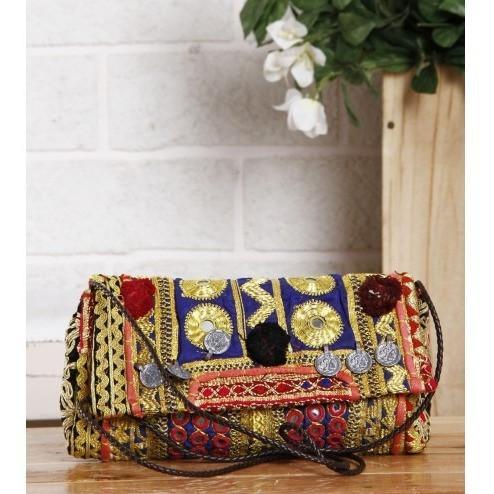 Indie Trunk · ClutchMulticoloured Embroidered Afghani Clutch (100000052898)
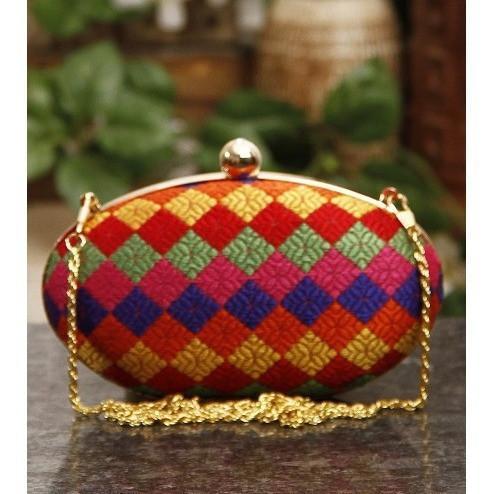 Klick by RG · ClutchMulticoloured Oval Clutch