
In this guide
Look through one layer before you look at the whole drape
Hold a single area of the saree over the blouse. Then put two folds of the same cloth over it. Notice how much more saturated the folded area looks. On a finished outfit the chest, side and front pleats may all show different depths of colour for precisely this reason. Do not buy a second blouse just because one section looks darker than another. First decide whether the change comes from layering or from two colours that really do not work together.
Inspect the edges of any lining. A sharp horizontal edge underneath a transparent panel can be more noticeable than the colour itself. If that line bothers you, try a different length or position of the base layer. If you like the contrast, keep it. Sheerness does not require you to disguise every seam. The point of a fitting is to decide which lines look deliberate and which will distract you while you wear the outfit.
Build coverage around movement
Turn as if you were reaching back for a chair. An area covered by a double layer while standing straight can open when you move. Check that version too. For a garment that will be worn in bright photography lights, have someone take a picture in an ordinary room and another near a bright window. You are not trying to predict a photographer’s exact settings. You are checking whether the difference between the two pictures changes your comfort with the purchase.
Keep the texture from becoming crowded
An embroidered edge, a shiny blouse, an ornate necklace and a sparkling bag can each be beautiful. Put all four together before assuming they are the best companions for a delicate surface. Remove one and look again. A plain bag or small earrings can let the embroidery be what people remember. When ordering, check the care instructions and whether a blouse piece is included or merely pictured. A styled gallery is not an inventory of what arrives in the parcel. If coverage is essential for a particular occasion and the listing cannot answer your question, choose an item you can try with the correct base well before you need to leave.
Make a simple layer map
Choose four places on the finished outfit: the front pleats, the side near the waist, the shoulder and the area below the knee. Look at them in that order and name what is underneath each. The front might have several folds over a petticoat; the side might have only one. The shoulder may have a patterned blouse underneath, while below the knee the only change of colour comes from a lining. Thinking in places stops a general worry about transparency from turning into a needless hunt for a completely different saree.
If one spot feels too exposed, change that spot before changing the whole look. A blouse with a different sleeve length affects the shoulder without changing the fall below the waist. A foundation closer to the shade of the outer cloth may soften the transition at the knee. A slightly wider fold may give the coverage you want at the side. Check any adjustment while moving rather than pinning extra fabric wherever the mirror seems bright. If you have to pull the drape out of its intended position to feel comfortable, this particular sheer piece may not suit this particular occasion. A less transparent fabric can be an entirely positive choice, not a concession to a styling failure.
Use light to read the surface rather than to flatter it
Hang the saree near a lamp without letting the fabric touch it. Look from the side as well as from directly in front. Sequins, metallic threads or a glossy finish may light up most strongly when seen at an angle. That means a restrained panel in the mirror can be quite bright while you are walking past someone. Decide whether you enjoy the movement of the light before adding another reflective element on the blouse.
Ask for a photograph without filters if a listing has a strong colour cast. Compare the colour of familiar objects in the scene, such as a white wall, but do not treat that as a precise calibration. Rooms painted cream and cameras set for evening light can both make a cool fabric look warmer. What you need from the seller is a description of the ground colour, the border and the visible lining, not an assurance that every screen shows the same shade. If there is no time to inspect the piece before the occasion, consider how forgiving your planned combination is. A plain blouse in a deliberate contrast will usually leave you with more options than a blouse that must match an elusive pearly undertone exactly.
Prepare a private fitting kit
Put your intended underlayer, blouse, shoes and one alternative base together before the parcel arrives. When it is time to try the saree you will then be comparing complete options rather than holding it over jeans and trying to guess how it might look. Include a full length mirror if you have access to one, or use two ordinary mirrors to see the rear of the drape. There is no obligation to send personal fitting photographs to a seller. A description or picture of the cloth over a neutral background is often enough to ask a product question.
Keep the trial short and clean until you know whether the piece is staying. Make sure the surface where the unused length rests has no rough edges. Avoid pins or permanent adjustments during a returnable fitting unless the merchant has expressly agreed to them. At the end, note which base you preferred and why. “The edge ended just above the knee and showed through” is a useful note. “It looked strange” is hard to act on. If you keep the saree, store that information with its care details. The next time the invitation says evening reception, you can enjoy choosing the earrings rather than repeating an entire investigation into layers.
On the day, keep a plain layer handy if you will move from a dark hall into daylight. You might never want it. Knowing it is there can make the difference between enjoying a sheer fabric and checking the mirror at every opportunity. Pick a layer that does not catch the embroidery, and try it over the finished shoulder arrangement rather than adding it for the first time outside the venue.
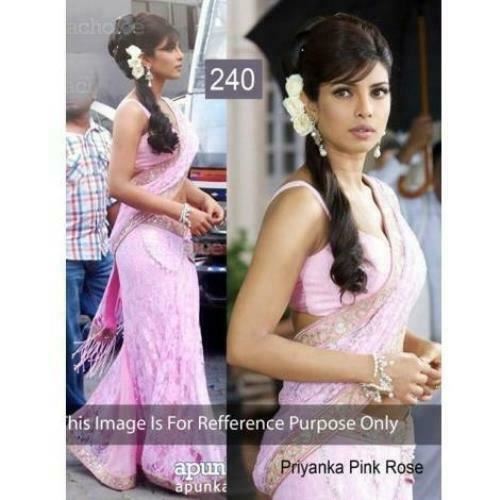 rangoutlet.com · Net SareesRam Chand Punam Chand (RCPC) BOLLYWOOD PRIYANKA PINK ROSE DESIGNER SAREE - Onlin
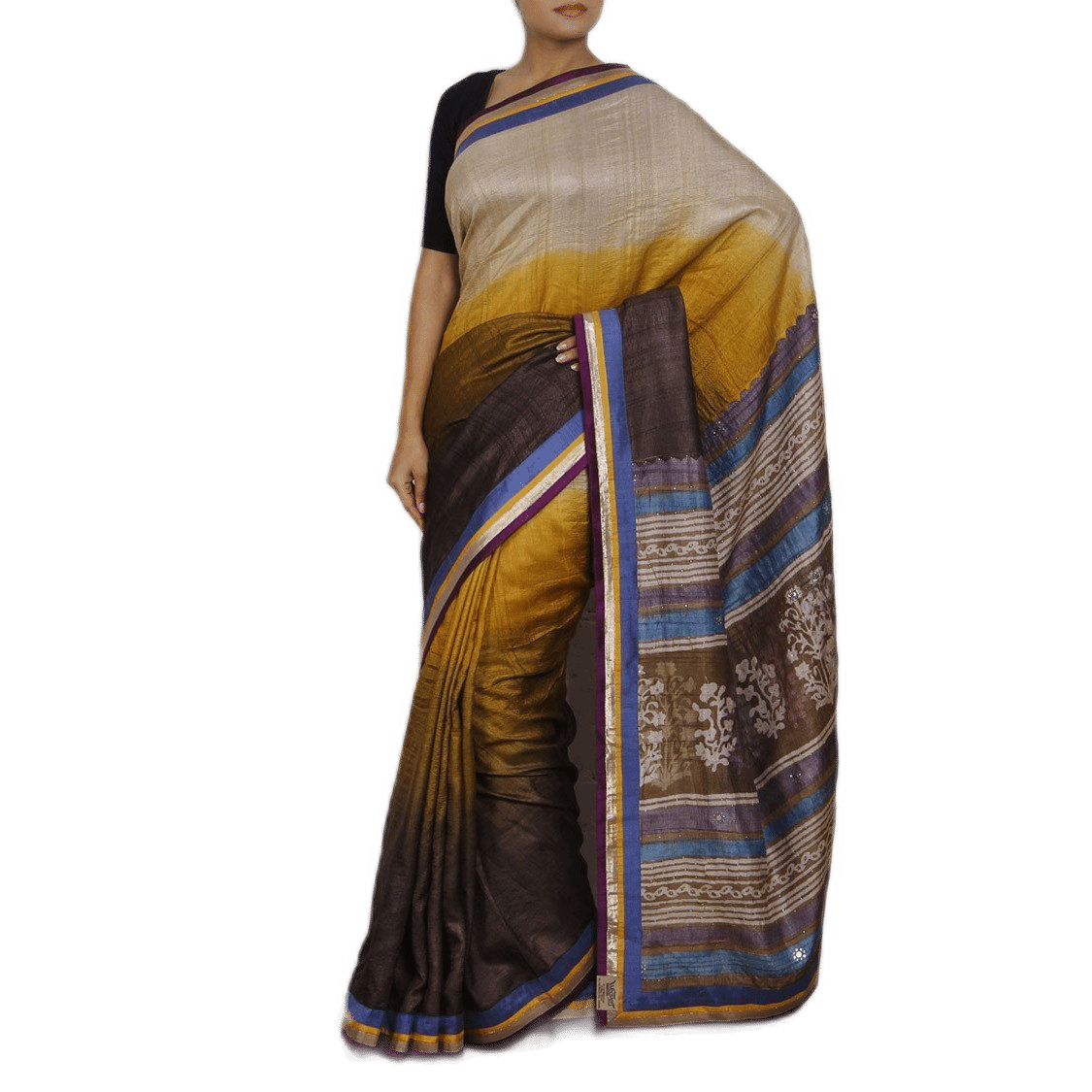 Weavers Studio · Silk SareesBeige & Dark Brown Silk Saree
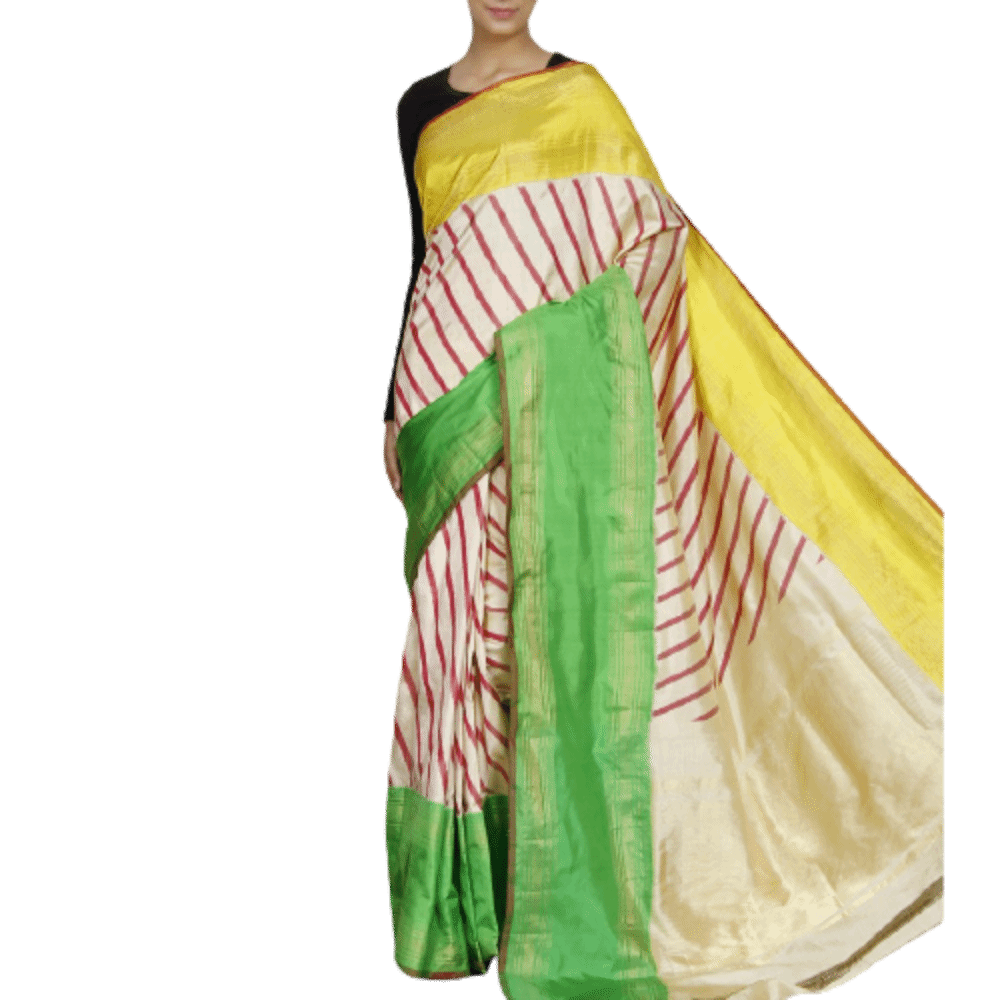 7 Karigar Gali · Silk SareesBeige & Green Handwoven Pochampally Silk Saree
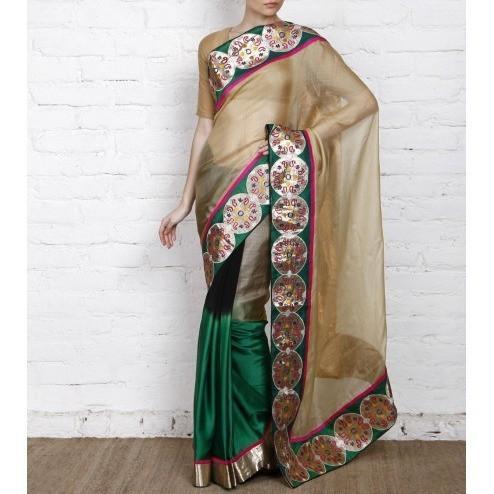 Pretty Women · Silk SareesBeige & Green Kota Silk Saree