
In this guide
Learn what the folds are doing
Take a long scarf you are not worried about creasing and fold it back and forth on a table. Lift the folded section in one hand and let the lower ends hang. Move your hand sideways. Narrow folds and broad folds open differently. Try varying the number without changing the total cloth. This little exercise makes it much easier to understand why there cannot be one correct number for every saree, every body and every drape.
On the actual garment, establish where the pleated section belongs in the drape you are using. Keep enough length for the shoulder end first. If you spend every spare inch on generous front pleats, the rest may feel cramped. If you leave nearly all of it at the shoulder, the front may not open as you move. Rather than counting by habit, look for a balance between an arrangement you enjoy and enough cloth for a normal stride.
Diagnose the fold that escapes
If one outer fold falls out while the rest stay put, look at how much of its upper edge was secured. It may have been the one you finished in a hurry. If the entire stack leans forward, check whether the waistband can support that thickness. Spread or adjust the folds in a manner appropriate to your drape instead of tightening the waistband until it is uncomfortable. If the line at the ankle looks crooked, first untwist the cloth between your hands and the floor. A twist near the top can masquerade as an uneven hem.
Spend the last minute walking
Take ten ordinary steps, turn and come back. Pause as though someone had called your name. Test the direction you normally turn when getting into a car. If you keep kicking the fabric, do not train yourself to shuffle for the sake of a particular front view. Adjust it or ask an experienced draper for help. Photograph the arrangement that survives the movement test, including a side view of the tucked section. A photograph of beautiful folds on a bed is not nearly as useful next month as a record of the arrangement that let you walk into a room without holding your outfit together.
Watch where your toes meet the front edge
Walk towards a mirror rather than across it. Does one shoe disappear under the middle of the folds? Does one foot consistently kick the outside edge? A problem at the centre is different from fabric hanging low at one side. Straighten the lower edges gently with the fabric relaxed. If you pull them taut and fix them in place that way, they may spring into a different position when you let go. Check the top before trimming, hemming or blaming the length of the saree.
Turn ninety degrees and take a side step as though making room for someone in a doorway. Some pleats move well going forward but spread and trap a toe on that lateral step. Watch which fold opens and whether it falls back freely. If you have someone with you, let them observe from knee height while you keep looking ahead. Looking down and leaning forward alters the very line you are trying to measure. Keep the pair of shoes with the saree while you practise. Where the front finishes over a covered shoe may look different from where you like it over an open sandal. A little visible shoe is preferable to a hidden edge that repeatedly catches as you take an ordinary step.
Read the border from both directions
Lay a short length of fabric over your forearm with the decorated edge facing out. Turn it over and look again. Some designs look almost identical from either side. Others show a distinctly different reverse, with floats or a paler pattern. This matters when you fold the edge back on itself. A styling photograph taken from the front will not tell you which surface faces the person standing beside you.
Now pull the fabric into three loose folds and release it. Look at how much of the design remains visible. A narrow edge can read as one continuous line. A broad motif can disappear in the middle of a fold and reappear as unrelated fragments. Neither result is wrong. If you bought the piece because of a particular flower, stripe or woven figure, decide where you want that detail to land before you fix the rest in place. Take a picture from the distance of a conversation, not an embroidery inspection. If the edge reads beautifully there, do not spend the morning trying to make every tiny repeat line up under a magnifying glass. That time is better spent checking that the arrangement stays comfortable.
Keep practice folds separate from lasting alterations
You do not need to commit the fabric to permanent pleats just because you want dressing to be quicker. Practise with the garment in its natural state and record the width you like against the span of your own hand. The next time, use that span as a rough starting point, then adjust for the particular shoes, blouse and foundation you have chosen. A measurement that makes dressing faster is useful. One that prevents you from changing the drape is less so.
If you are considering having the pleats stitched in place, speak to a tailor who can see the fabric and the drape on you. Ask how easily you could take it off, put it on alone, change the waist position or have it altered later. Would the stitching affect a border you want to show differently next time? Would it leave marks if removed? Think about care and storage too. A stitched section may need different handling from an entirely loose length. For a borrowed saree, get permission before making any change at all. For an heirloom, it may be wiser to learn one reliable temporary arrangement. Speed on a single morning is a poor trade if it prevents someone else from wearing the same much loved piece in their own way.
Keep an old sheet or long scarf for practising the hand movement. It will not behave exactly like silk or cotton, but it lets you learn to transfer a stack of folds between hands without repeatedly handling a valuable textile. When the movement feels familiar, move back to the real cloth and adjust for its thickness rather than expecting the practice measurements to carry over unchanged.
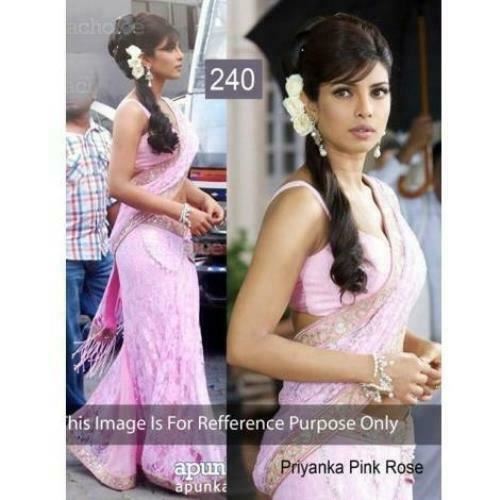 rangoutlet.com · Net SareesRam Chand Punam Chand (RCPC) BOLLYWOOD PRIYANKA PINK ROSE DESIGNER SAREE - Onlin
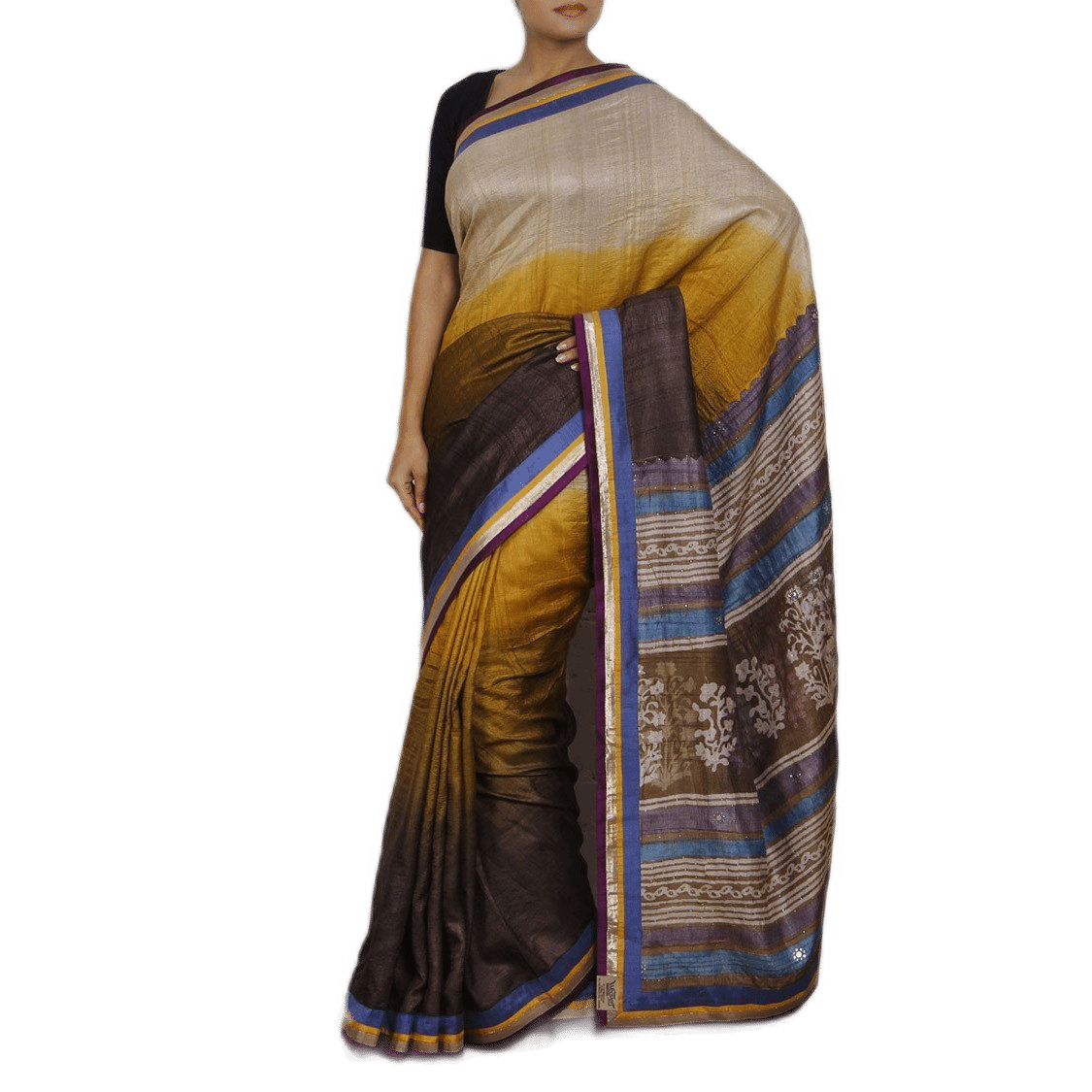 Weavers Studio · Silk SareesBeige & Dark Brown Silk Saree
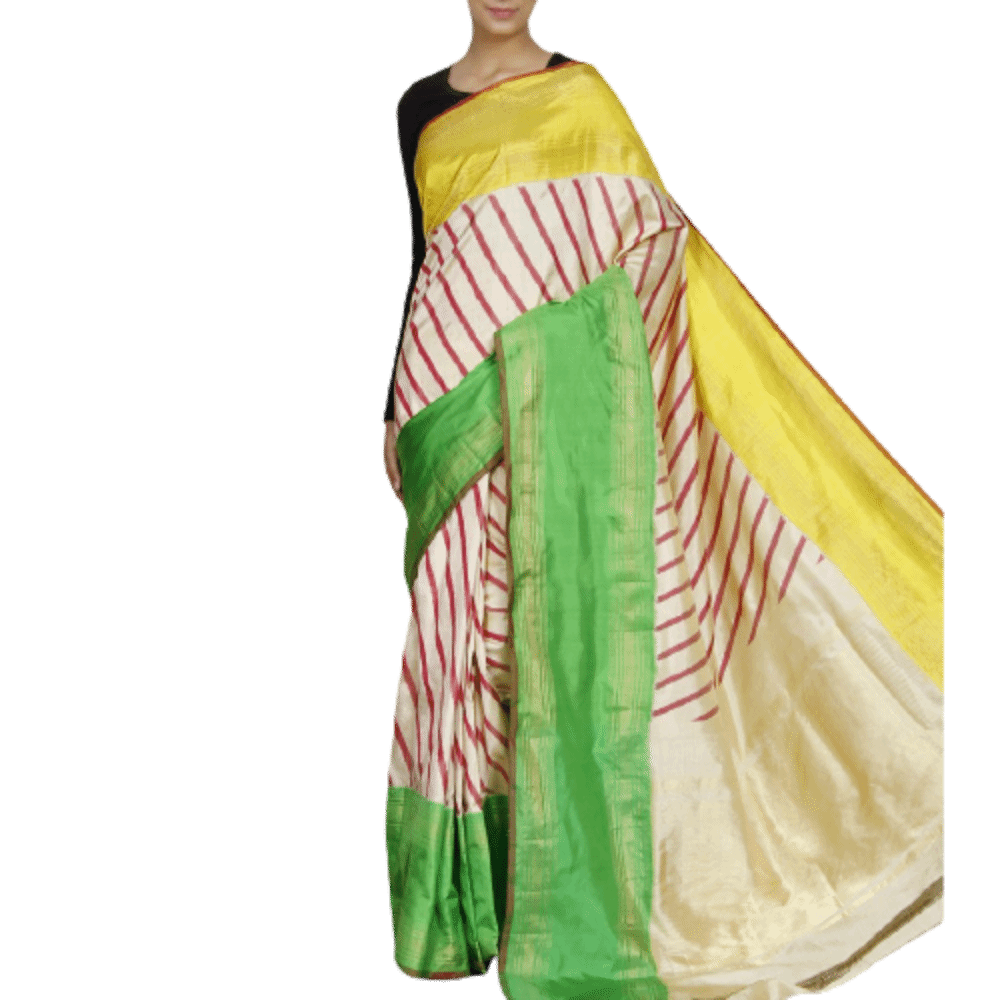 7 Karigar Gali · Silk SareesBeige & Green Handwoven Pochampally Silk Saree
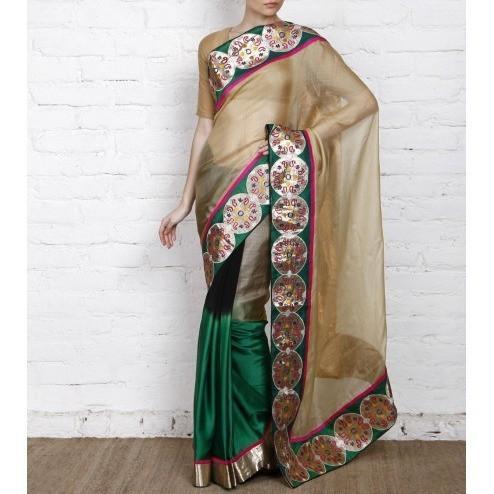 Pretty Women · Silk SareesBeige & Green Kota Silk Saree