
In this guide
Translate the title into separate questions
A useful way to read a listing is to make four small spaces on paper: fibre, structure, decoration and origin. Copy the seller's actual words into the spaces where they belong. Silk goes under fibre. A reference to a woven border describes part of the structure or decoration. A place name might refer to a style or where the article was made, depending on the wording. If you cannot place a word with confidence, leave it in a fifth space called ask. Blank spaces are more honest than filling them from the price or the photograph.
Imagine two descriptions. One says silk blend with woven motifs; the other says art silk with an embroidered end. In neither case does the word silk by itself tell you the proportion of natural silk in the saree. Art silk is a trade description often used for materials made to resemble silk. Ask what fibres are present and in what proportions if that matters to you. A clear answer may reveal that the less expensive piece is entirely suitable for what you want. You have not failed a test of taste by liking the appearance of a material other than natural silk.
Read what the photograph can actually show
Images can tell you about the placement of pattern. They can show whether a border is narrow or broad relative to the body, and often whether the design changes across the end panel. They are less reliable for judging the substance of a fabric. Strong light, careful pressing, background colour and camera exposure all affect apparent sheen. A brilliant highlight is evidence about that photograph, not a fibre test. The same applies to a video of cloth moving in somebody's hands. It can help you imagine the fall but cannot certify how the threads were made.
Ask for a close view of the front and reverse of an important motif if the listing is unclear. The purpose is to understand how the surface is finished and where loose decorative threads might contact a blouse or jewelry. It is not to authenticate an entire tradition from a few floats of thread. If you are new to a weave, a seller willing to explain the limits of what they know is preferable to one who offers a spectacular guarantee based entirely on shine. Keep the item number in the message so the answer relates to the option you might order.
Pay attention to the scope of a claim
Silk body with a contrasting border makes a narrower claim than a statement about every component. The border, supplementary threads, blouse piece, lining and tassels can have their own materials. When buying for a person with a strong fibre preference, ask which parts the composition covers. The answer might be exactly what you need even when the decorative thread differs. Similarly, a reference to hand finishing may concern tassels or embroidery without telling you whether the base cloth was woven by hand. There is no need to dismiss the work. Just name it accurately.
If a listing mentions a certification or mark, ask to see the information accompanying the specific item and find out what that scheme covers. Fibre content, geographical origin and a production method are separate questions. Documentation relevant to one does not automatically answer the other two. A missing certificate is not by itself proof of deception, but it may mean you cannot verify a claim important to your purchase. Decide how much uncertainty you can accept before paying a premium. You can enjoy a saree as a beautiful garment without buying it as a documented example of a particular craft.
Price the whole wearing experience
Make a comparison between pieces that will do the same job. A costly weave bought for a milestone may be perfectly reasonable if its provenance is important to the recipient and its care suits their home. A lighter blend may be a more welcome choice for someone who regularly travels with a small bag. Include the cost of a blouse, any preferred edge finishing and future cleaning when comparing two price tags. Ask for the care instructions for the exact piece. A method suitable for its body might be wrong for a delicate finish on its border.
Do not try home experiments involving flame, solvents, wet rubbing or pulling threads from a new purchase. Besides damaging the item, a result from one loose thread would not establish the composition of all the cloth. Protect your return options instead. Read the description before ordering, save its wording and inspect the label on arrival. If it differs from what you understood, contact the seller before cutting, washing or wearing anything. A documented answer can settle the question without sacrificing a corner of the saree to an unreliable test.
Keep a separate note of unfamiliar terms exactly as printed. A salesperson can clarify a term from the specific label much more easily than a half remembered English translation. This is especially worthwhile if you plan to buy in one language and describe the gift to its recipient in another.
Write a comparison another person could use
For each finalist, finish this sentence: I would choose this one because the seller confirms this detail and I like this visible feature. You might write that the fibre proportions are specified and the small border will leave the body visible in your usual drape. For another piece, the answer might be that the finish is easy to care for according to its instructions and that the decorative end is the right scale for your shoulder. Concrete sentences make it clear when two candidates are good for different reasons rather than better and worse versions of one another.
If you are buying a gift, pass along the precise description with the care information. Say that the seller describes a silk blend rather than shortening the phrase at every family retelling until it becomes something else. If a production detail is unconfirmed, there is nothing awkward about leaving it out. The person opening the box can see the colour and feel the weight without an elaborate claim. What they cannot see, and may thank you for much later, is the work you did to understand exactly which promises came with their saree.
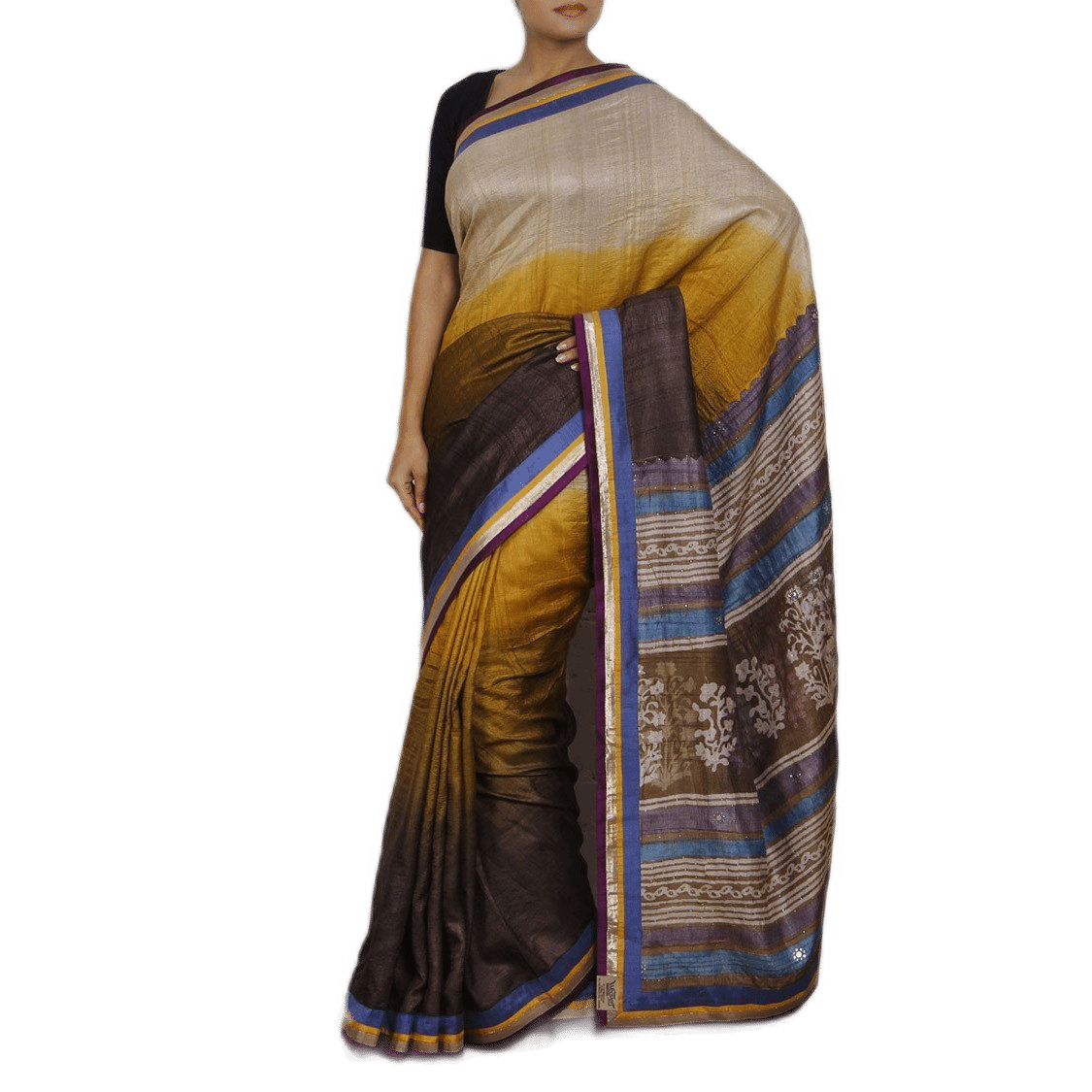 Weavers Studio · Silk SareesBeige & Dark Brown Silk Saree
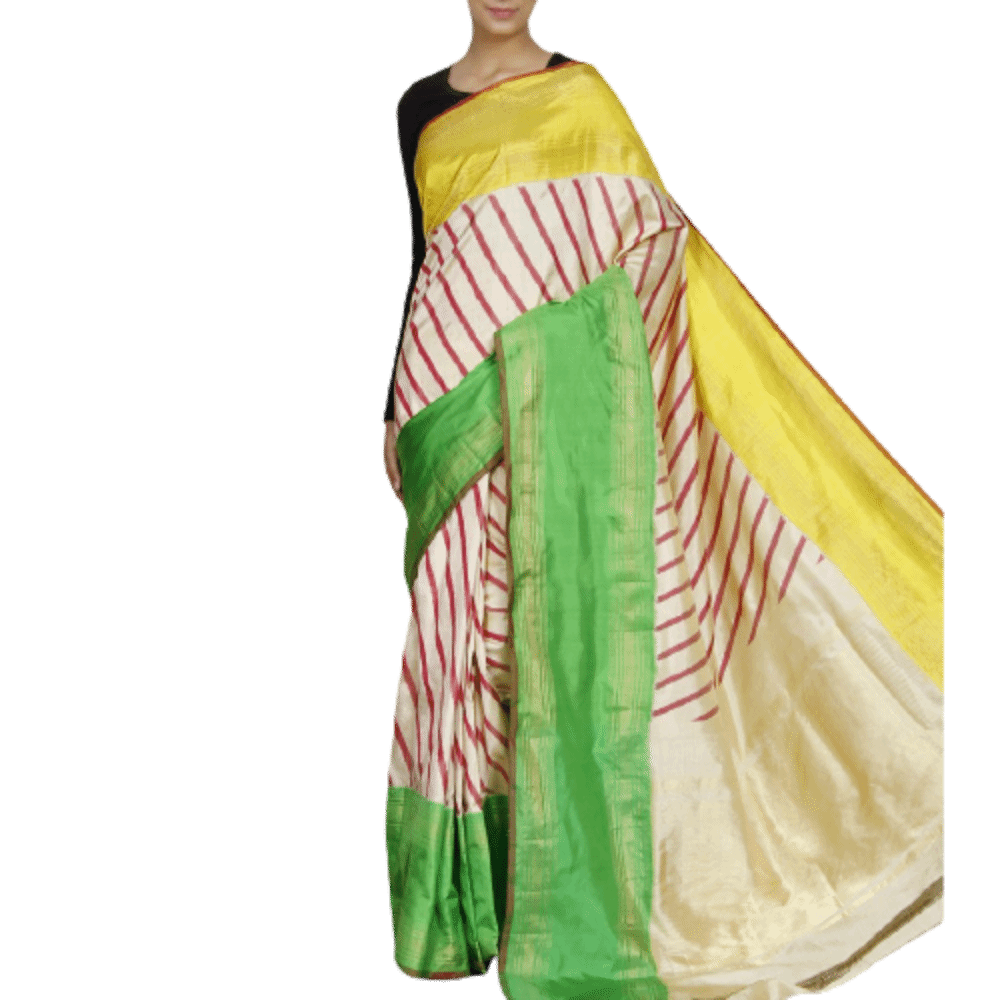 7 Karigar Gali · Silk SareesBeige & Green Handwoven Pochampally Silk Saree
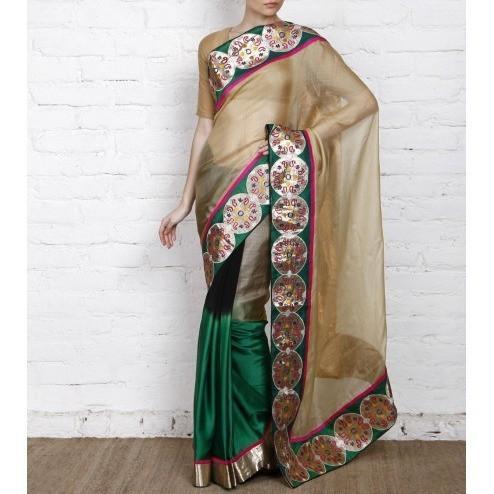 Pretty Women · Silk SareesBeige & Green Kota Silk Saree
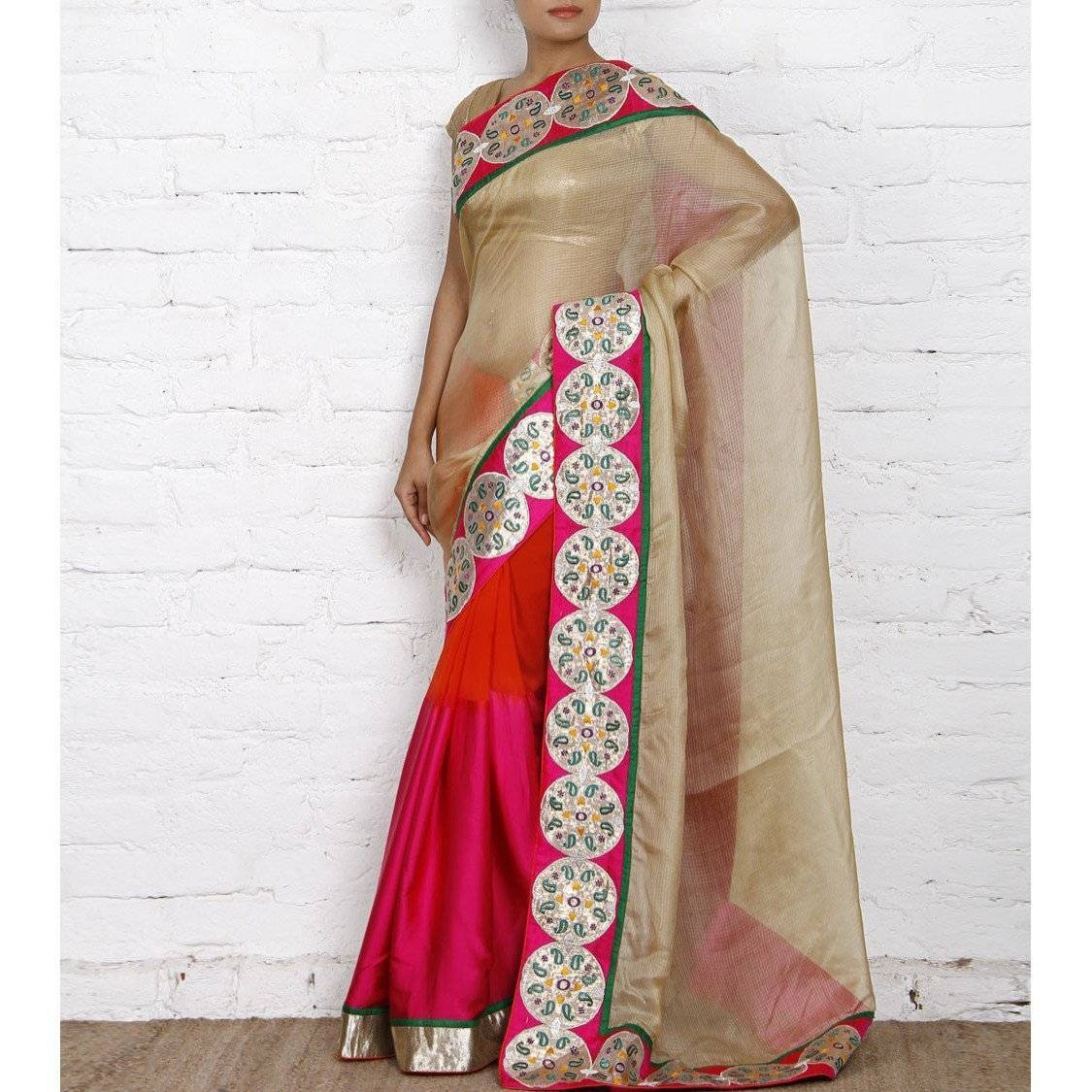 Pretty Women · Silk SareesBeige & Pink Kota Silk Saree