
In this guide
Read the design as a picture
Open the decorative end on a clean surface. Does it contain one large scene, a series of small motifs or a broad band at the very edge? Imagine folding a painting until only a vertical strip is visible. You may lose the thing you liked about it, or you may discover a striking new line. Try a loose fold, then a narrower one, and photograph both over the same blouse. Pay attention to where the pattern lands, not just how formal one version appears.
For a soft saree with a subtle design, an open shoulder might need less arranging than you expect. For a piece with heavy work at the edge, the same position can pull backward each time you turn. Feel the balance before making a plan around it. Try carrying an empty plate with one hand and greeting someone with the other. If you need a third hand just to keep the pallu in view, choose a more contained arrangement for the meal.
Decide which moment matters most
An open pallu for photographs and a narrower fold for dinner can make sense, but only if you can make the change without taking the drape apart. Practise it before counting on the idea. Ask where you could change discreetly and whether someone who knows the fabric will be nearby. Sometimes a single broad fold shows plenty of the design and gives enough control for the rest of the evening. There is no prize for making the largest possible transformation between rooms.
Choose the blouse and bag after the shoulder
An open panel can hide the sleeve detail you wanted to show. A narrow pallu can leave a necklace fighting for the same diagonal line. Put those objects back into the picture before making the final decision. If you carry a shoulder bag, try the strap on both sides and see whether it presses the folds flat. A clutch solves that difficulty only if you are happy to give up one hand. On a day when you will be helping children, carrying gifts or serving food, that practical choice can matter more than an extra glimpse of embroidery.
Give the end panel a place in the room
Think about the pallu as something people see from several sides. Spread it out behind you and the design is available to someone standing at your back. Bring more of it across the front and it becomes part of the view across a table. Before deciding, find out where you will spend the most time. A broad display behind a high backed chair will not be in view during dinner. If seeing the pattern matters to you, give it a place where you can enjoy it yourself as well.
Try a compromise fold that shows just the outermost band and one complete repeat of the motif beside it. Begin at the edge you want visible and fold the spare cloth beneath it. Starting at the opposite edge and hoping the motif lands on top can be frustrating. Hang the arrangement over your arm first so you do not tire your shoulder while experimenting. Once it looks right, transfer the shape gently and check whether it still feels balanced. You may decide that the extra inch of pattern is not worth the extra weight at the shoulder. A slightly narrower panel that stays beautifully visible is a better display than a magnificent one that spends half the evening slipping out of sight.
Look for things that catch
Use your eyes first. Inspect the inside of a bracelet, the back of an earring, the clasp of a bag and the underside of a shoulder strap. An open jump ring or a rough corner may barely register against a fingertip but catch a fine thread each time you move. If an edge looks unfinished, set the accessory aside for repair. Testing it on a special garment is an expensive way to discover a fault.
Dress in the order that leaves the fewest objects for the fabric to pass over. Pull on the garment before putting in long earrings. Settle the wrap before fastening a necklace that sits close to its edge. Reach for a glass, turn to greet someone and pick up your bag. Notice which pieces meet during those movements. Moving the bag to the other shoulder can solve a problem without changing the outfit. If something does catch, stop moving and take the tension off both pieces. Ask someone to help you separate them rather than pulling until one gives. A final check when undressing matters just as much as the one before you go out, especially when you are tired.
Make photographs answer a question
A dozen near identical mirror pictures rarely make a decision easier. Choose one question first. Perhaps you want to know whether the necklace disappears against the border, or whether the drape covers a detail you paid to have embroidered. Set the phone down at a consistent height and take one picture of each option without changing the room, light or camera setting. Comparing the options is harder if one picture is a bright close view and the other is a dim full length shot.
Look at the small versions first. What do you notice before you zoom in? Then enlarge the area that prompted the question. A border that looks magnificent up close may quite reasonably be a quiet detail in the whole outfit. Finally take a short video of turning and walking. Still pictures tell you very little about a chain tapping against buttons or a shoulder fold falling forward. Delete the versions you do not want and keep the one that answers your question. This is a private fitting tool, not a requirement to photograph yourself for other people. A trusted second pair of eyes can do the same job if you prefer.
For a final choice, set a real object in front of you, such as the bag or bouquet you expect to carry. Pick it up, walk to another room and set it down again. Ask yourself which version of the pallu you thought about least during that small journey. On a day with a lot to do, that quiet answer can be more revealing than two otherwise equally attractive photographs.
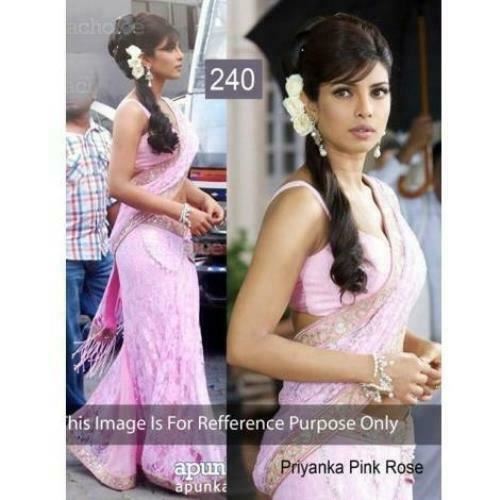 rangoutlet.com · Net SareesRam Chand Punam Chand (RCPC) BOLLYWOOD PRIYANKA PINK ROSE DESIGNER SAREE - Onlin
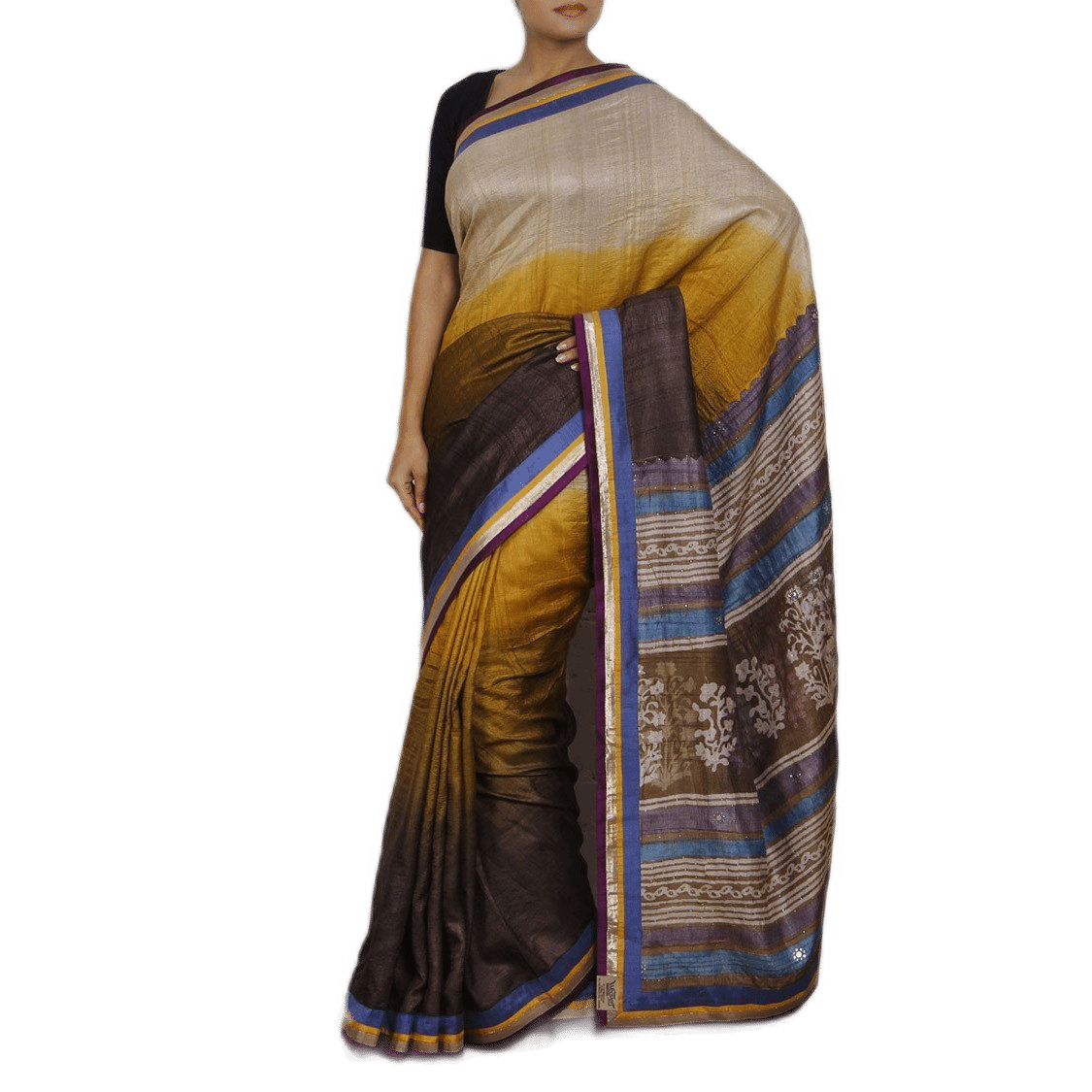 Weavers Studio · Silk SareesBeige & Dark Brown Silk Saree
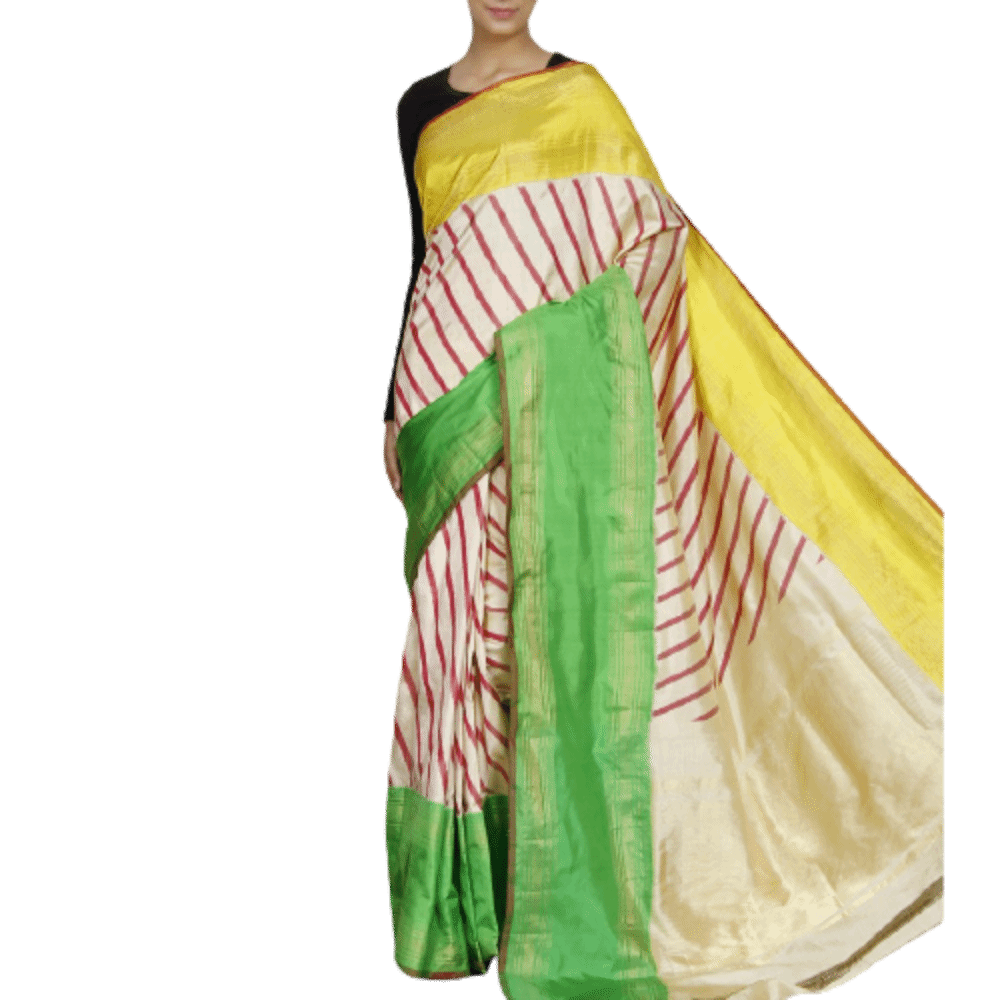 7 Karigar Gali · Silk SareesBeige & Green Handwoven Pochampally Silk Saree
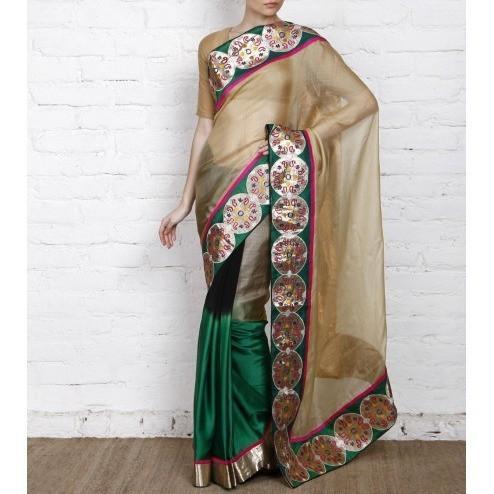 Pretty Women · Silk SareesBeige & Green Kota Silk Saree