
In this guide
Look at the cut before the size table
A straight kurta, a flared one and a design with deep side openings use fabric differently. Lay a reference garment flat and trace its outline with your fingers. Where does the widening begin? Where do the openings start in relation to the part of your body that needs more room? A new garment can have the same chest measurement and feel entirely different lower down. Product photographs showing the front only may conceal that difference. Ask for a side view if the openings matter to you.
Wear the reference with the bottoms you normally choose. A thick waistband or a full skirt underneath can change how a kurta falls at the hips. Sit and stand again. If the hem stays caught rather than falling back into place, note the height where it catches. You now have a specific point to measure. Saying that one garment sticks about a hand below the waist tells a seller more than saying that you are always between two sizes.
Compare two possible solutions
The first is a size change in the same cut. Ask how the shoulder width and arm opening change along with the hip width. The second is a different cut in the size that already works at your shoulders. Compare the two on paper. If a larger straight garment needs the shoulder, sleeve and neckline altered, it may be a costly route to a problem a gently flared cut would solve immediately. If the larger size already fits well elsewhere, a small adjustment might be perfectly sensible.
Keep the decision reversible until you know
Check the return terms before ordering two sizes or planning an alteration. Do not cut tags or ask a tailor to open seams until you have made your decision about keeping the piece. Mark the fit issues on a note rather than on the garment itself. If you ask someone to help you compare, have them check the back and sides while you move naturally. Their job is to notice what the cloth does, not to assign your body a category. A flattering garment is not one that persuades you to stand very still. It is one whose shape gives you the room you need without losing the details that drew you to it.
Compare like measurements
Lay a garment that fits on a hard, level surface and smooth it gently without stretching it. Measure between the same two points you will ask the seller to measure. For the chest, that might be straight across just below the armholes. For the hip, record how far below the shoulder or waist you took the measurement as well as the width. On a flared garment the width changes as you move down, so a number without a location is easy to misread.
Write “flat width” beside the figure. If a chart lists a full garment circumference, doubling a flat width may help with a simple symmetrical garment, but pleats, overlapped fronts and shaped panels can complicate the comparison. A chart of body measurements is a different thing again. Do not double it or add room until you know what the chart represents. When two numbers seem contradictory, send your reference measurement and ask for the same measurement on the precise size under consideration. Give the unit every time. This is not about finding the size label you wish to see. It is about repeating a shape that already lets you move the way you want.
Separate room to move from a size label
Ease is the difference between the space your body occupies and the room the garment provides. A fitted stretch top and a woven kurta can both have the same size label and feel completely different when you reach across a desk. Compare a candidate with a garment made from material that behaves similarly. A stretchy favourite is not a reliable pattern for how much room you need in a piece that hardly gives at all.
Raise both arms as if putting something on a shelf. Sit, lean forward and reach across to the opposite side. Notice whether pressure comes from the shoulder, arm opening, chest or hip. Buying a larger size everywhere can solve one problem while creating another. A shoulder seam that slips far down the arm may still restrict movement if the arm opening is cut in the wrong place for you. Tell the seller or tailor which movement is difficult, not just that the piece feels small. If you cannot try the item before ordering, describe the test using the garment you already own and ask for a comparable measurement. That turns a vague fit worry into a question somebody can actually answer.
Bring a brief to the fitting
Take a garment you like to wear, the fabric or listing for the new piece, and one picture that shows the shape you have in mind. Say what you like about the reference garment. It may be the sleeve opening rather than the overall size. Ask the tailor to distinguish what can be altered from what would need a different cut or more fabric. A seam allowance cannot be assumed from the view of a finished garment online.
Agree on the important decisions before cutting. Write down length, sleeve style, neckline, closures, lining and which edge or motif should be kept intact. Ask who supplies additional material and whether a fitting and any adjustments are included in the quote. Bring the shoes and underlayers you expect to use if they affect length or fit. At the fitting, move in the garment instead of holding a still pose for the whole appointment. Ask for leftover fabric and the care information when you collect it. Keep the order reference with your notes. If you decide to make another piece later, you then have a record of what changed between the original idea and the garment you actually liked wearing.
When the parcel arrives, compare the left and right sides of the garment on a level surface before drawing conclusions about fit. A twisted side seam can pull a top to one side and feel like a sizing issue. Smooth it gently, try it again and document what you see if it remains uneven. A question about construction needs a different answer from a request for a larger size.
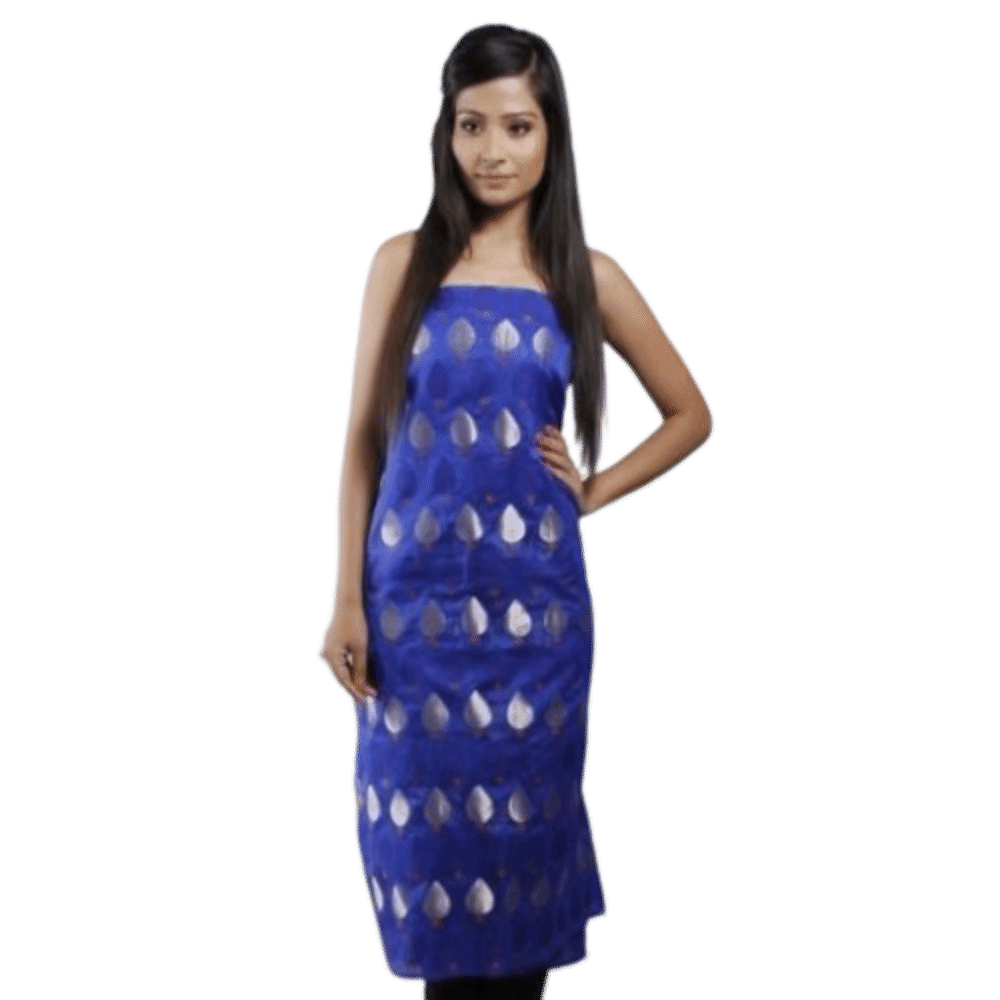 Kehri · Designer KurtisBeige & Blue Unstitched Chanderi Silk Kurta
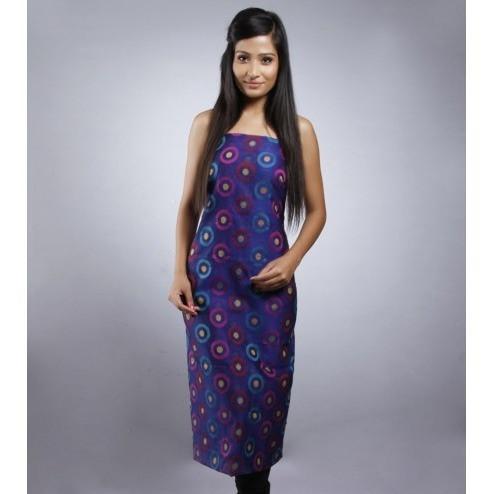 Kehri · Designer KurtisBlue & Purple Unstitched Chanderi Cotton Kurta
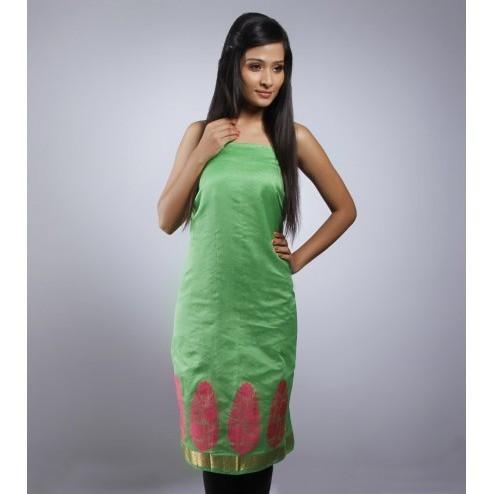 Kehri · Designer KurtisGreen Unstitched Chanderi Cotton Kurta
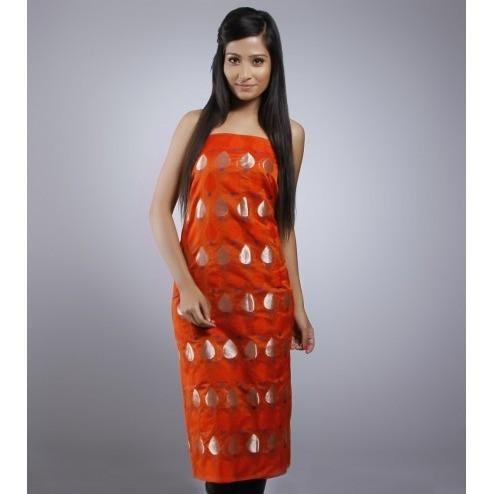 Kehri · Designer KurtisOrange Unstitched Chanderi Silk Kurta