
In this guide
Count shapes rather than counting items
Lay a clean soft cloth on a table and bring out one group at a time. Sort studs, long earrings, rigid bangles, flexible chains, broad necklaces and pieces with projecting decoration. Put damaged or incomplete items in a separate area so they do not vanish back into the regular collection. Count pairs as pairs but also note whether the two earrings can share a compartment without touching. Ten pairs of small studs and ten pairs of wide jhumkas need quite different spaces. A product claiming room for twenty pairs has not answered the most important question yet.
Measure the longest drop, widest bangle, bulkiest pendant and tallest earring with its post and back in place. Write down usable dimensions, not just the visual diameter. A dome shaped earring may fit in the width of a tray but be crushed by its lid. A rigid necklace may require support along an arc rather than a narrow chain slot. Make paper shapes representing the largest pieces if you are shopping in person. You can test a drawer or compartment without carrying valuable jewelry around or trusting a photograph of somebody else's conveniently small collection.
Separate display from safe retrieval
Decide which items you reach for on a rushed morning and which come out for occasions. The everyday pieces should be easy to remove one handed without lifting several trays. Occasion pieces can occupy deeper storage if they remain protected and clearly labelled. If you like seeing everything, a shallow drawer with divided spaces may serve you better than a tall display stand. An open stand is handy for a few frequently worn pieces but may expose others to dust, light or repeated contact. Match the arrangement to the material guidance for what you actually own.
Practice the motion of taking a pair out. Is there space for your fingers beside the object? Can you reach the back of a post without forcing it through stiff material? Will the next pair fall when you lift the first? The same test matters when putting things away. A system that requires both hands and careful threading every night tends to produce a pile of loose jewelry on top of the closed box. An easy landing place for today's pair, followed by a simple path back to its proper compartment, is often more effective than an elaborate display.
Give chains and heavy fronts different support
Fasten a chain if appropriate and arrange it separately so it does not thread through its neighbours. A dedicated channel can work for fine chains, while a wide statement necklace might need a shallow supported compartment with enough room for the decorated front. Hanging everything from hooks may leave weight concentrated at a small point, especially if the piece is heavy or its links are delicate. Check the maker's advice and choose support accordingly. A long chain need not be pulled tight across a tray merely to make the display look orderly when the drawer opens.
Look for rough joins, projecting screws and exposed adhesive on a prospective organiser. Consider both the lining and anything that might transfer colour or react with a finish. A soft appearance is not a guarantee that a material is suitable for every metal, pearl or bead. Ask about the lining if storing a valuable piece, and seek specialist guidance for antiques. Avoid letting earrings share a space with loose safety pins or garment hooks. They may all belong to the same outfit, but a sharp point is quite capable of marking the object it was meant to accompany.
Decide whether the box will ever travel
A home drawer and a travel case do different work. At home, gravity usually acts in one direction. In a bag, the case may turn on its side and be pressed from above. Test an empty candidate with safe stand ins before trusting it with a fragile set. Do compartment dividers meet the lid closely enough to stop pieces moving across? Does the closure stay secure without requiring you to squeeze the contents? A roll can suit some flexible pieces while offering very little protection to projecting posts or sculptural earrings. Match the structure to the most vulnerable component.
For a trip, take fewer pieces and select them by outfit rather than pouring the entire everyday tray into a pouch. Make a note or photograph of what is travelling and put small backs in a secure section. If borrowing jewelry, agree how it should be transported and returned. Follow relevant carrier and insurance guidance for valuables and do not treat a decorative travel case as theft protection. The useful question is whether it keeps your chosen pieces separate, supported and identifiable while in your care, not whether the product name contains the word secure.
Leave enough space between stacked trays to lift each one level. A drawer without finger clearance tends to be tilted from one corner, sending loose earring backs into neighbouring compartments. A small pull built into the tray may be worth more than an extra row of tiny decorative slots.
Try the shelf before buying the furniture
Measure the cupboard or drawer where the organiser will live, including clearance for opening the lid and pulling out lower trays. A case that fits beneath a shelf when shut may be impossible to use without moving it every morning. Check whether the weight will be manageable once full. If space is limited, two shallow containers labelled by use may be better than a single grand chest. Start with the collection you have now and leave a little room for change; an enormous mostly empty box can become an invitation to buy things you never needed.
After a week, look at the places where jewelry has actually landed. If the same necklace remains on a dressing table, ask whether its official slot is awkward or simply too far from the mirror. Move the everyday section before blaming yourself for untidiness. Keep one small labelled space for repairs and review it occasionally so missing backs do not turn whole pairs into permanent residents. The best organiser is not the one that photographs like a shop counter. It is the one that gives you back a wearable pair of earrings, both backs included, when you have three minutes to leave.
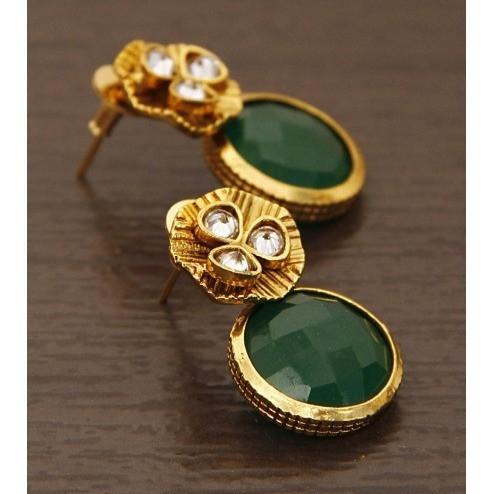 Aradhyaa Jewel Arts · EarringsBlue & Golden Embellished Earrings
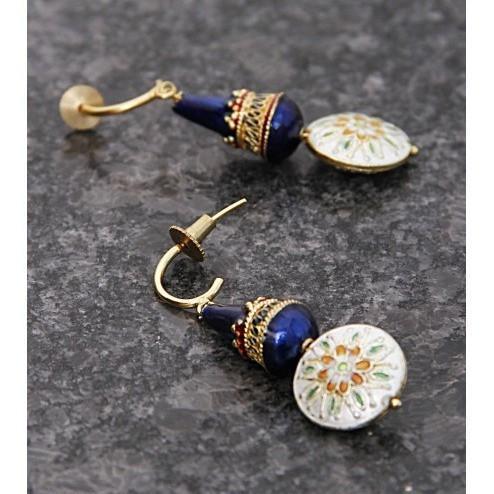 Aradhyaa Jewel Arts · EarringsBlue & White Embellished Earrings
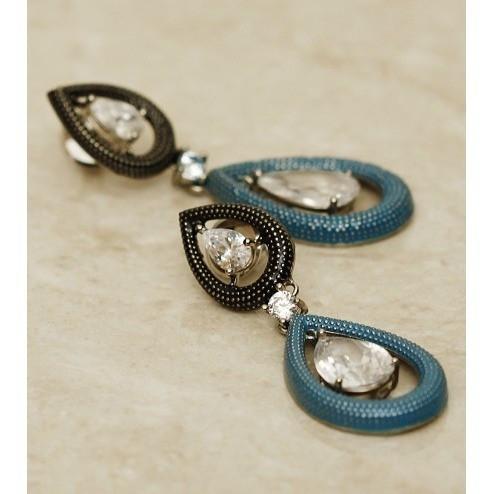 Aradhyaa Jewel Arts · EarringsBlue Teardrop Embellished Earrings
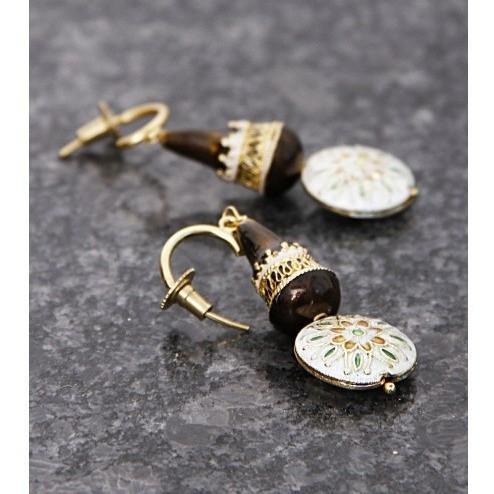 Aradhyaa Jewel Arts · EarringsBrown & White Embellished Earrings