
In this guide
Set up for the morning you will actually have
Choose a room with enough clean floor space for the cloth and put the pieces in dressing order. You want the blouse, a suitable foundation, shoes and whatever fastening you already know how to use. An unstitched blouse piece is fabric, not a blouse you can put on tomorrow. Check that distinction while there is still time to borrow or buy a finished top. If the blouse is ready, put it on and see whether you can manage the closure without assistance. That is a useful discovery even before you unfold the saree.
Pick one drape to practise. If a relative is showing you a family style, ask them to teach you that one from beginning to end rather than combining their instructions with several videos. Different drapes start in different places. Ask which is the decorative end and which edge should meet the floor. Have them demonstrate the first few folds slowly, then take the cloth and do that part yourself. Watching someone fluent can make a sequence look deceptively simple.
Find the one thing that is making it hard
When the arrangement feels wrong, name the problem before starting over. If the decorative end is too short, releasing a little cloth from one section may be enough. If the whole thing shifts, look at the base rather than adjusting the outer folds. If you love the front but the shoulder feels bulky, try fewer or wider folds there. Change one thing and walk across the room. It is very hard to learn what helped if you change the shoes, waistband and shoulder position all at once.
Leave yourself a way back in
Time the second attempt, not the first lesson. Add a generous margin for getting dressed on the day and keep a comfortable alternative nearby if you are on a tight schedule. An alternative is not an admission of defeat. It takes the pressure off the practice session and lets you keep the saree for an occasion when you will enjoy it. Put the exact blouse and underlayer with the saree when you finish. Knowing that everything is in the same place may save more time in the morning than another hour spent perfecting a single pleat.
Check the hem with the shoes you will wear
A hem can look perfectly level in bare feet and become a different length the moment you slip into sandals. Put both shoes on, stand on a hard floor and make the adjustment there. Look at the front, the side nearest the tuck and the back. A mirror tilted against a wall can make the front look shorter than it is. Ask someone standing level with you to check, or set your phone on a shelf and walk past it.
Try the smallest step you expect to take on the day. That might be a curb outside the venue or the lip of the doorway at home. If your toe catches fabric on level ground, stop and lift the drape rather than counting on a free hand to hold it all evening. If the front clears but the back drags, check the height of the first turn before you shorten everything. Finally try your spare flats, if you plan to change shoes. Note where you will retuck the fabric. A shoe change is much easier to manage when you already know which bit needs attention.
Give the outfit a chair test
Choose a firm chair rather than the edge of a bed. A bed lets you perch at the height that suits your clothes. A dining chair puts your knees, waist and hips in something closer to their positions at a reception table. Sit all the way back, breathe normally and stay there while you read a page. Notice whether a waistband digs in, whether a seam pulls and whether the cloth tries to slide out when you move your feet. Comfort for the first five seconds says surprisingly little about comfort through dinner.
Now stand without gathering everything in both hands. Imagine that one hand holds your phone. If you have to perform a little rescue operation, find out why. A slippery underlayer needs a different solution from a hem trapped beneath the chair leg. Change one thing, then repeat the same movement in the same chair. Do not decide that the whole outfit is wrong when a single tight tuck is the problem. Equally, do not ignore persistent pressure because a photograph looks nice. The version that lets you forget about the clothes while you talk to someone is usually the one to take.
Give a helper a useful job
If a friend is helping you dress, ask them to watch what the cloth does while you move rather than to keep rearranging it as you stand still. A person behind you can see a twisted border you cannot see. You are the only person who can feel a shoulder pulling. Agree that you will say when something feels secure. An impressive arrangement that only works while another person holds one corner is not quite finished.
Before you take the outfit off, ask for three plain phone pictures. One from the front records the length, one from the side records the fall of the fabric, and one close view records the join or fold you want to repeat. Save the pictures together with a note about the shoes and underlayer. You do not need to share them with anyone. If you are dressing alone next time, prop the phone up where you can glance at the reference without turning around. Recreate the first stable point and work outward from there. That is much easier than trying to copy every crease from a formal portrait in which half the garment is hidden by your arm.
If you have only one evening to learn, split it into two short sessions with a break. In the first, work with someone who can answer questions. In the second, start alone and see how far your notes take you. The first step where you stop is the step to ask about again. Learning to recognise that point is more useful than asking a friend to do the whole drape a second time while you stand with your arms out.
 rangoutlet.com · Net SareesRam Chand Punam Chand (RCPC) BOLLYWOOD PRIYANKA PINK ROSE DESIGNER SAREE - Onlin
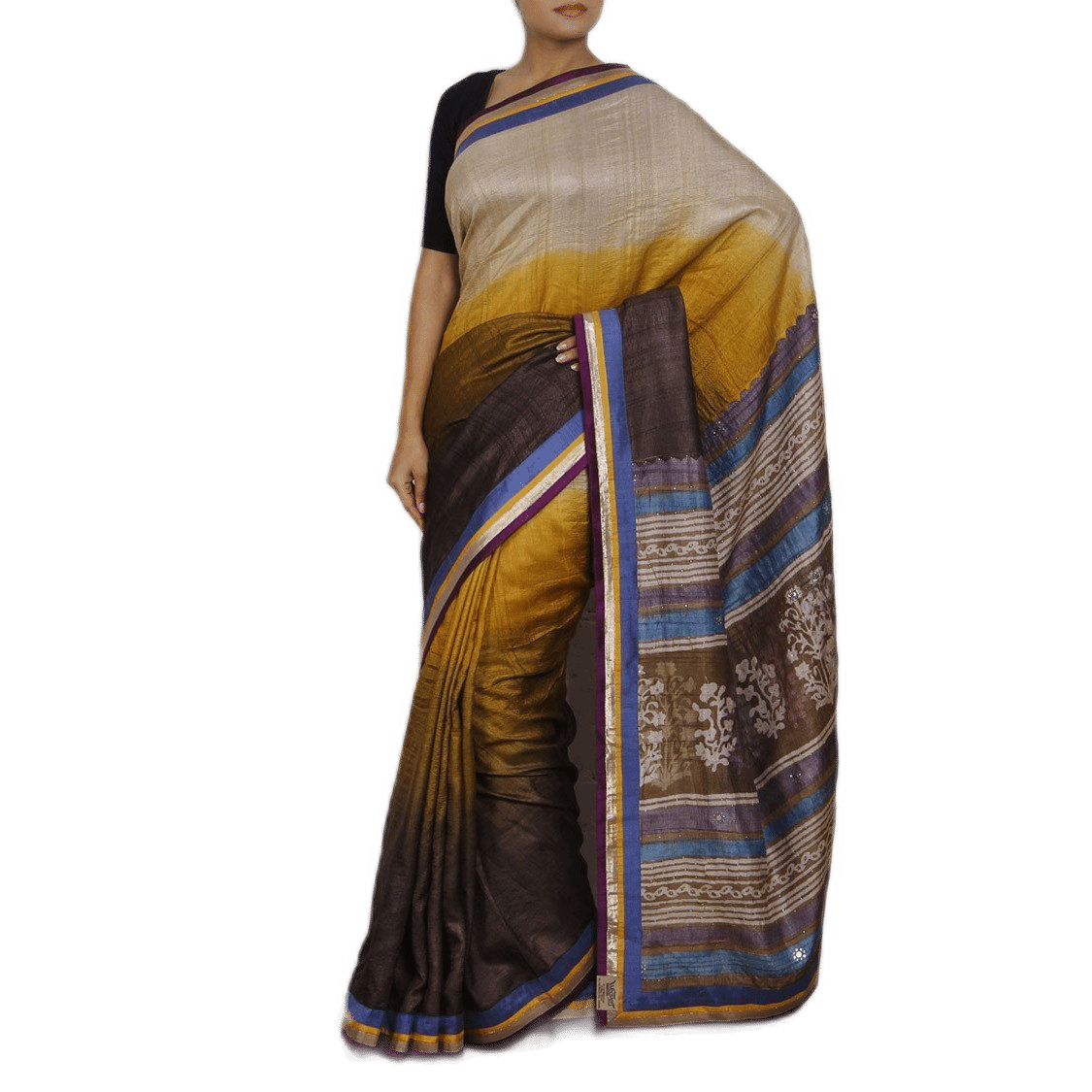 Weavers Studio · Silk SareesBeige & Dark Brown Silk Saree
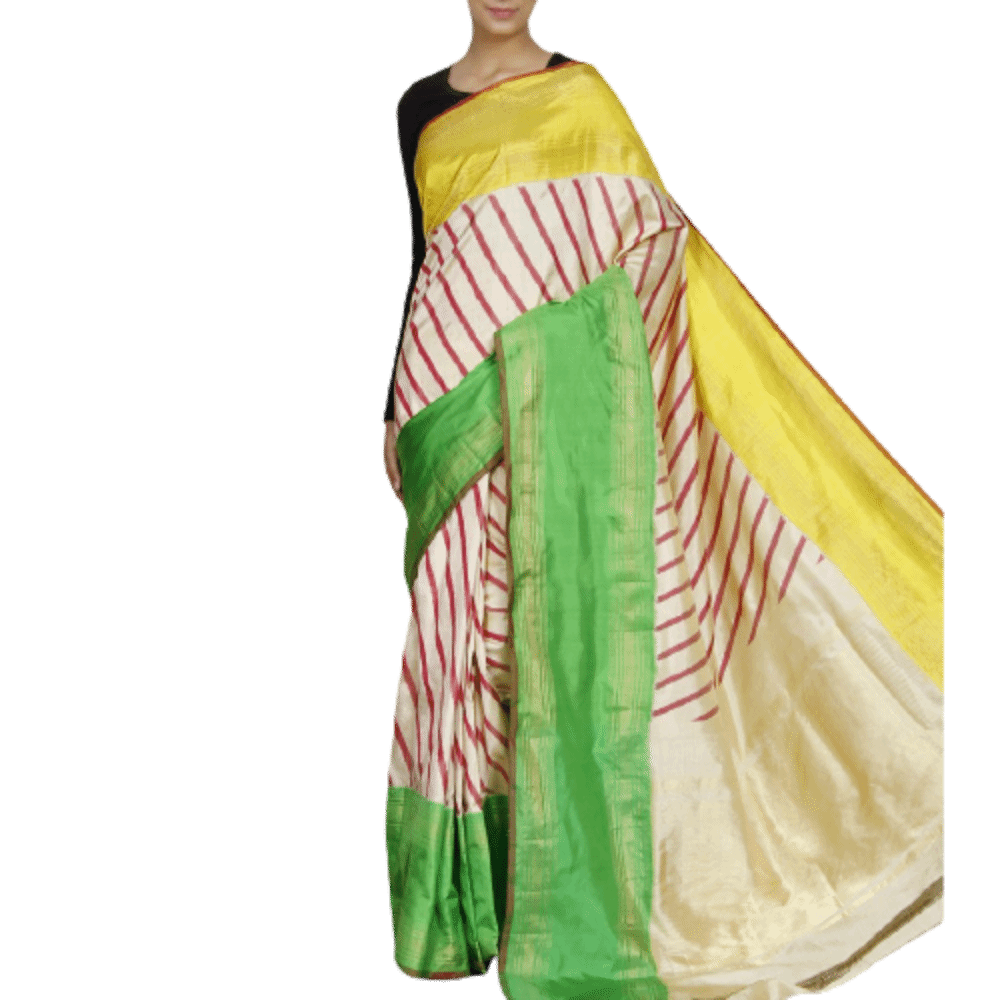 7 Karigar Gali · Silk SareesBeige & Green Handwoven Pochampally Silk Saree
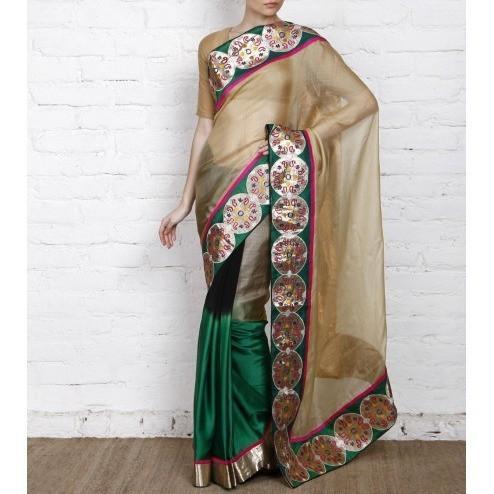 Pretty Women · Silk SareesBeige & Green Kota Silk Saree