
In this guide
Compare the amount of pattern, not just its name
Two floral designs can feel entirely different together. A kurta covered with small, closely spaced flowers can look almost like a textured solid from a distance. A dupatta with widely spaced flowers may then become the clearer pattern. Reverse the scales and the kurta may take the lead. Lay the two pieces together, step back and then walk close again. If both patterns demand attention at both distances, try folding the dupatta so a quieter area is visible.
Look at the space between motifs. A print with a lot of plain ground gives the eye somewhere to rest even if its colours are strong. A border design can do a similar job when the centre is simple. If the listing shows only a folded view, ask to see more of the width before deciding that the pattern is evenly distributed. Sometimes the detail you love occupies one end and will disappear if you wear that end behind you.
Use a plain piece as a comparison
Even if you intend to wear two prints, briefly lay a plain scarf beside the kurta. Notice which detail becomes clearer. Now put the patterned dupatta back. Has it added a useful connection or merely covered the part you liked? If it works only when spread out flat, try it on the shoulder and across the front. Cloth occupies much less visual space in a narrow fold than it does on the bed. That can rescue a combination that looked overwhelming at first glance.
Let the rest of the outfit be a control
Keep the shoes, bottoms and bag unchanged while comparing wraps. Otherwise you may decide that a pattern is wrong when the real distraction is a third strong colour at your feet. For a purchase, note the length, width and position of the border as well as the colour description. If you want a dupatta to stay visible on both sides, an unusually short one may disappoint even in the ideal print. Take one final look with the layers arranged as you will wear them, then choose the pairing that pleases you at normal conversation distance. You do not have to explain the pattern relationship to anyone for it to work.
Compare pattern repeats in a narrow fold
Make a fold roughly the width of the section you expect to wear over one shoulder. Count how much of a motif remains visible across it. If you see only disconnected corners of several shapes, try a wider fold or choose a different part of the fabric for the front. If one whole shape is visible, decide whether you want to line it up with a similarly sized detail on the kurta or put it beside a quieter area.
Try reversing the relationship. A tiny print beside a large motif can look deliberate because the eye reads them at different distances. Two different prints of the same size may form a pleasing dense pattern or may compete. There is no reliable rule until you see the actual spacing and colours. Temporarily cover half the kurta with a plain cloth and look at the remaining area. Then remove the cover and look at the whole arrangement. This simple comparison reveals whether your eye is reacting to the prints themselves or to the quantity of print visible at once. Sometimes narrowing the dupatta by a few inches achieves exactly what you wanted without changing a single colour or buying a different pattern at all.
Choose an anchor shade you can describe
If someone asked what joins the two prints, what would you point to? You might say that a smoky green leaf on the top reappears in a broad green area on the dupatta. Or the colours might be different while both prints share an ivory background. Being able to name one connection helps you decide which colours are free to differ. You do not have to find duplicates for every tiny thread.
Compare both pieces against the trousers as well. A cream ground on the kurta, a stark white dupatta and yellow leaning ivory trousers can look like an accidental near match even if all three were described as neutral. Separating the shades with a darker bottom or choosing one clear contrast can make the combination read more deliberately. If you cannot try the pieces together before ordering, look for differences big enough to survive the uncertainty of a screen. Take the SKU and a description of the detail you want to match to the seller. Asking whether the small leaves are blue green or olive is more likely to produce a useful answer than asking if the two designs will “go.” The latter depends partly on taste; the former is a detail somebody can check.
Let a border act as the dividing line
Fold the dupatta so a length of plain border lies between the two printed surfaces. Look at what happens when they no longer touch directly. A quiet band can give the eye enough space to appreciate both patterns. If the border is heavily decorated instead, try showing the quieter centre near the busy part of the kurta and letting the ornate end hang against plain trousers. You have changed the meeting point, not the underlying colours.
Test that arrangement in the position you normally wear. If it depends on holding one corner at an exact angle, it may look beautiful on a flat surface but frustrating on a moving person. Choose a larger area of plain ground, or move the point of interest to the end that naturally stays in front. Look at the reverse side when the fabric turns over your arm. A border that reads as a dark line on one side might show loose threads or a very different colour on the other. If you are choosing between listings, ask for an unfolded photograph and a view of the reverse. Those two images will answer more styling questions than several close pictures of the same beautifully arranged corner.
If a printed pairing seems almost right, try moving the meeting point away from the neckline before replacing either piece. Let the patterns meet lower down over a plainer part of the kurta. Then bring the wrap back up and compare. Seeing both versions is a good way to decide whether the issue was the prints themselves or simply too many detailed lines clustered in one small area near your face.
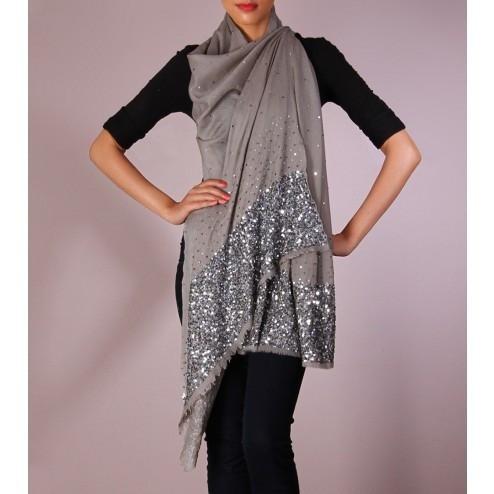 Vuala · Dupattas - WrapsGrey Sequined Cashmere Shawl
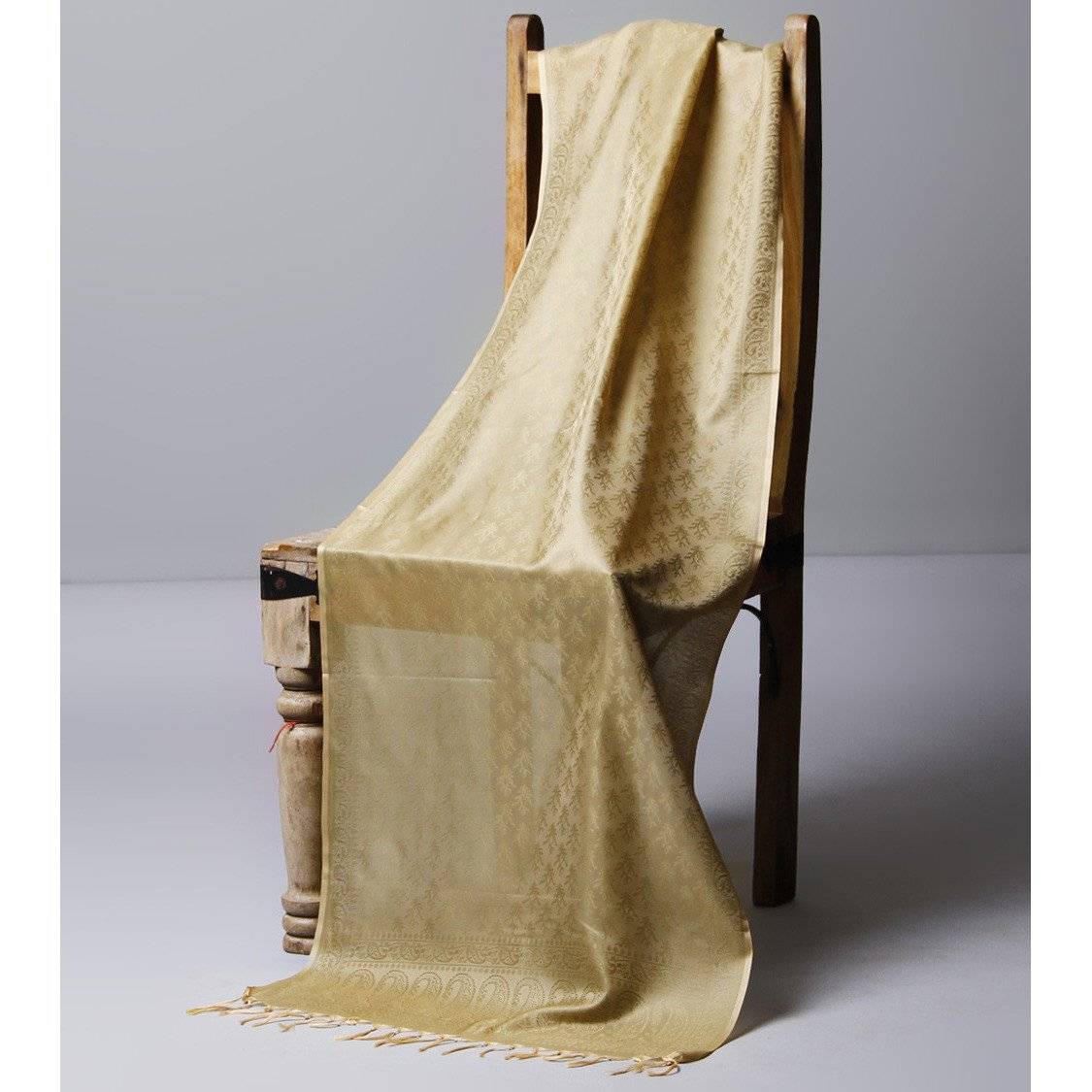 Kehri · Dupattas - WrapsBeige Cotton Silk Stole
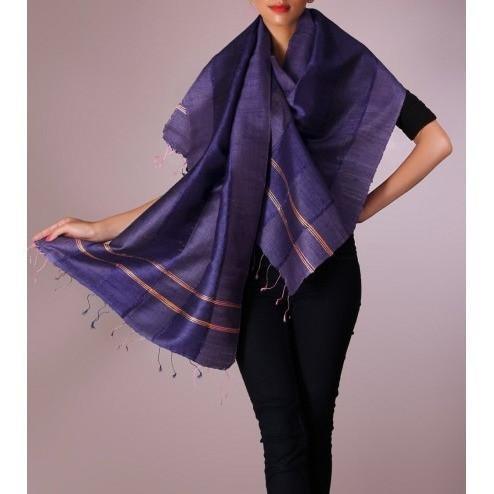 Vuala · Dupattas - WrapsBlue Handwoven Raw Silk Stole
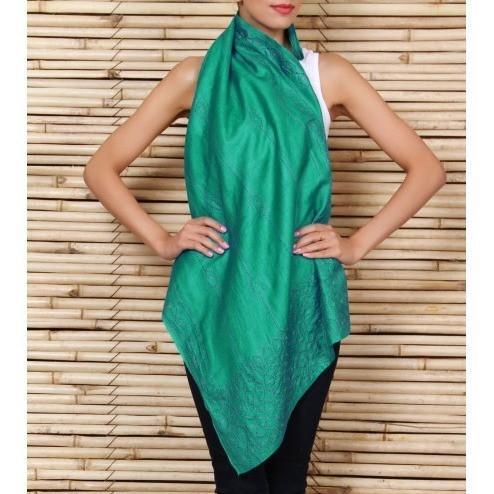 Sadhna · Dupattas - WrapsBlue Silk Stole with Kantha Work