
In this guide
Agree on the occasion before the colour
Ask each other what the invitation signals about formality. If one person is planning an easy afternoon kurta and the other a heavily embellished evening look, matching a belt to a border will not bridge the difference. Check with the hosts if necessary and make a joint plan for the event that actually exists. Discuss any part either person plays in the ceremony. A family member with a specific role may need to dress differently from their partner, and it is fine for the outfits to reflect that difference rather than forcing an identical level of decoration.
Each person should choose one piece they genuinely want to wear. Lay those two pieces next to each other before shopping. Notice what already connects them: depth of colour, texture, the scale of a pattern or simply a similar degree of polish. Sometimes dark trousers and a deep coloured saree already look considered together without a matching accessory. Ask what each outfit needs on its own. Coordinating should not leave one person buying several unwanted things while the other wears exactly what they had planned. The goal is a comfortable pair of outfits, not one main outfit and a human accessory.
Echo a small part rather than the whole surface
Take a patterned garment and find a secondary colour small enough that you might miss it at first glance. Repeat that colour in a modest area of the other outfit, perhaps a blouse edge, a pocket square or a narrow section of a stole. The two blocks need not be identical if the connection is clear. A slight difference is often easier to live with than two large fields meant to match exactly. If the only possible link is a metallic thread, try echoing its warmth or coolness rather than buying two accessories in a supposedly identical finish.
Imagine a cream kurta with a deep green jacket beside a saree with a fine green leaf in its border. The relationship already exists. Adding a green bag, green shoes and another green wrap may bury the small pleasure of noticing it. On the other hand, if the saree is solid blue and the partner wears a navy suit, a warm contrasting accent on just one side can make the combination feel less like a formal uniform. Change one thing at a time and step back between changes. Otherwise you will not know which adjustment actually helped.
Compare scale and light in the same room
Photograph both outfits together in indirect daylight with the same camera, without filters. Put them side by side rather than photographing each separately and trying to match pictures from different screens. Now look from across the room. Do two strong prints compete at the same scale? Does one bright surface dominate every view? You need not balance every element equally. You may want one striking piece and one quieter one. What matters is that the contrast is intentional and both people like how their own clothes look when they are not standing together.
Test the arrangement under an ordinary indoor lamp as well, particularly for an evening event. Different materials can reflect light very differently even when their colours look close outdoors. If exact matching is essential to you, ask about physical samples or compare the actual pieces before committing to alterations. Do not rely on names such as wine or champagne across sellers. Those words are descriptions, not calibrated measurements. When two colours fail by a small amount, a deliberate contrast may be simpler than a long search for a third supposedly identical shade arriving in another parcel.
Coordinate changes of layer and venue
Plan the arrival photograph and the rest of the evening as separate scenes. One person may remove a jacket as soon as dinner begins. Another may wear a wrap outside but carry it indoors. Does each outfit still look complete after those changes? Is there a convenient place for removed layers? If all the coordination depends on a scarf somebody finds too warm to keep on, the plan is already asking too much. Let a base colour or similar level of formality do some of the work that the temporary details cannot sustain.
Try moving together in the clothes. Walk through a doorway, stand side by side and sit at a table. A bag with a rough chain can brush against a partner's delicate sleeve. A long loose end can slip under the other person's shoe on stairs. If one person has agreed to carry the phone or tickets, check the relevant pocket or bag with both sets of essentials. An attractive pair of looks that requires one person to keep rescuing the other's hem will not feel particularly coordinated after the first ten minutes of the reception.
For a long weekend, choose one gathering for intentional coordination and give yourselves permission not to repeat it at every meal. A shared colour at the ceremony will stand out more clearly if breakfast and the journey home do not also require a carefully matched set of clothes.
Spend on the detail with a life of its own
Look for the smallest addition that completes an outfit even when the other person is absent. A plain stole that works with several kurtas, or a blouse that also goes with a saree already at home, is usually a safer buy than a special item made useful by only one photograph. Borrow a likely accessory and try the effect before ordering a new one. If one partner has a tight budget, use the pieces they already own as the fixed point and make any optional purchases on the other side of the comparison.
Once both people are happy, take one photograph together and one of each complete outfit separately. That gives you a packing record and reminds you what worked when another invitation arrives for only one of you. Do not let the last shopping trip undo a settled plan because a shop display offers an entire matching collection. The ideal result looks good when you arrive through the same door but does not require you to stand next to each other all evening to explain the clothes. A shared idea should be visible in the pair and comfortable in each part.
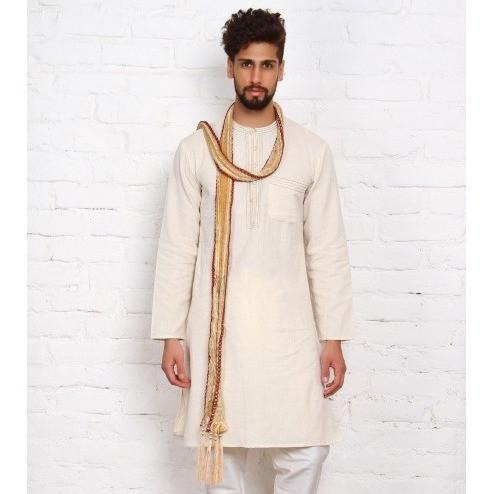 Surekha · MenCream Silk Blend Stole
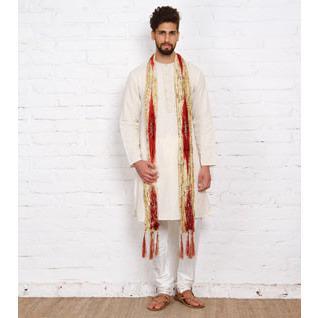 Surekha · MenMaroon & Cream Silk Blend Stole
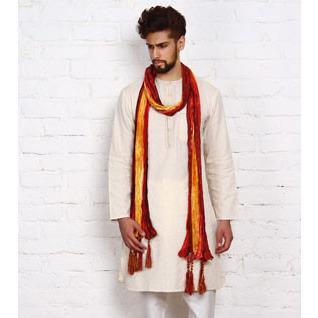 Surekha · MenMaroon & Mustard Silk Blend Stole
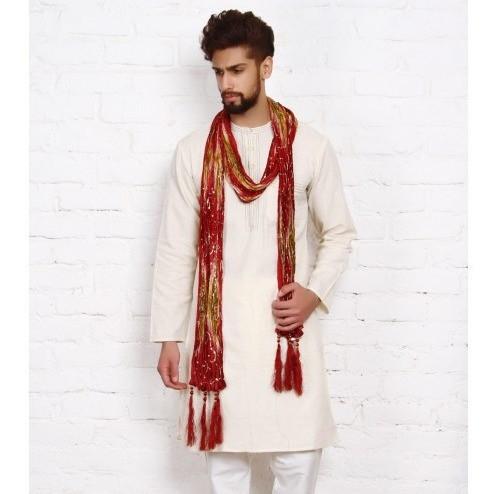 Surekha · MenMen - Maroon Silk Blend Stole