
In this guide
Start with three candidates rather than thirty
Use what you own to make three rough options. One should be close to the main colour of the saree. One should pick up a smaller colour from its design. The third should be plainly different. You can do this first with folded tops or scraps of fabric if you do not own three blouses. Drape the saree across them so only the amount of blouse you would actually see remains visible. A bold colour filling a tabletop can look surprisingly gentle as a small sleeve.
Say you have a pale pink saree with green leaves and an ivory ground. A pink blouse may create one continuous field. A muted green can bring the leaves forward. A deep plum might frame the pink without matching anything at all. These are ways of looking, not a shopping list. If you prefer the plum, there is no need to hunt for a matching plum thread in the original cloth to justify your choice.
Judge finish separately from colour
The colour may be right while the surface feels wrong. A very shiny blouse can draw the eye away from a quiet border. A plain matte blouse can give detailed work somewhere to stand out. Fold a small area toward and away from the light to see how much the appearance changes. If you are comparing online listings, ask what the fabric and lining are. The word satin refers to a surface and weave, not a promise about the fibre or how comfortable it will feel.
Think about the second saree
Before commissioning a blouse, lay the proposed shade beside another saree you wear. Could you use the blouse again without buying a new necklace or a different underlayer? If the answer is yes, you may be able to justify spending more on a fit you really like. If it is for one exceptional occasion, that is a valid decision too. Give the tailor a clear brief on sleeve, neckline and opening rather than asking the colour to carry the entire outfit. A blouse that you cannot fasten easily or that pulls when you lift an arm will not become a favourite simply because the shade is perfect.
Compare colour under the same light
Put the two actual pieces next to one another on a plain surface. Keep their edges touching. A warm white bulb can make both look golden; a window can reveal that one is peach and the other is a cool pink. Move the pair together, first near the window and then to a lamp similar to the lighting at the event. Do not judge one from memory in the hallway and the other straight from a photograph taken outside.
When shopping online, keep your strongest reference close at hand. It might be the blouse you already own or a scrap left from an alteration. Compare several pictures of the candidate rather than forcing a match with the brightest image. Display settings, reflected light and editing all affect what you see. If the outfit only works when the shades are identical, acknowledge that it is a risky remote purchase. A deliberate contrast is often easier to judge. Ask for a daylight picture alongside a neutral surface if the distinction matters. Even that is an aid rather than a guarantee. Keep tags on and follow the return conditions until you have seen the pieces together in person.
Borrow a colour without buying a set
Find a small patch of colour in the piece you already own. Look beyond its main field. A thread in the border, the centre of a printed flower or a line around a motif can give you a better starting point than trying to buy more of the dominant shade. Cover the rest of the pattern briefly with a piece of plain paper. Is that patch really green, or is it a deep blue beside a yellow that made it look green?
Take the paper away and hold your possible addition at the distance where it will actually sit. A bag at hip height does not need to match a blouse at the shoulder with laboratory precision. If the colour repeats clearly once, let the rest be quiet. For a second outfit, repeat a different small colour and leave the first one alone. You have changed the emphasis without replacing the main garment. When nothing in your wardrobe supplies an exact echo, test a plain neutral before putting another purchase in the cart. The most useful addition is one you can name another partner for before the first occasion has even happened.
Look at the space around the neckline
Put on the top before deciding what belongs beside it. Use a soft ribbon to sketch where a necklace might fall. Hold the ribbon loosely in front of the neckline rather than tying it tightly. Try a short curve near the collarbone and then let it fall lower. Notice the space between the curve and the edge of the fabric. If the two lines touch only when you are standing completely still, they may cross untidily as soon as you sit down.
Try the same exercise with the pallu or dupatta in place. A neckline that looks empty on its own can look quite full once a diagonal border comes across it. One solution is to leave the neck open and put the colour at the ears. Another is to choose a chain long enough that the pendant lands on a plain patch of cloth. Neither is a rule about which necklines deserve which jewelry. You are deciding which outline you want to see. Make the choice with your hair and the garment arranged roughly as they will be worn, then check that the clasp can be reached without undoing the whole outfit.
When sending a tailoring brief, distinguish the blouse colour from the piping colour in writing. If the main cloth is green and the trim is pink, mark which sample is which. A small trim can be a clever way to connect two garments, but it is hard to undo once the blouse has been finished. Ask to see both against the saree before anyone cuts the trim to length or attaches it to the neckline.
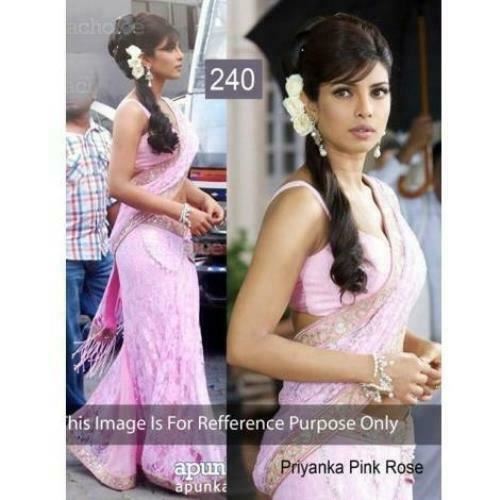 rangoutlet.com · Net SareesRam Chand Punam Chand (RCPC) BOLLYWOOD PRIYANKA PINK ROSE DESIGNER SAREE - Onlin
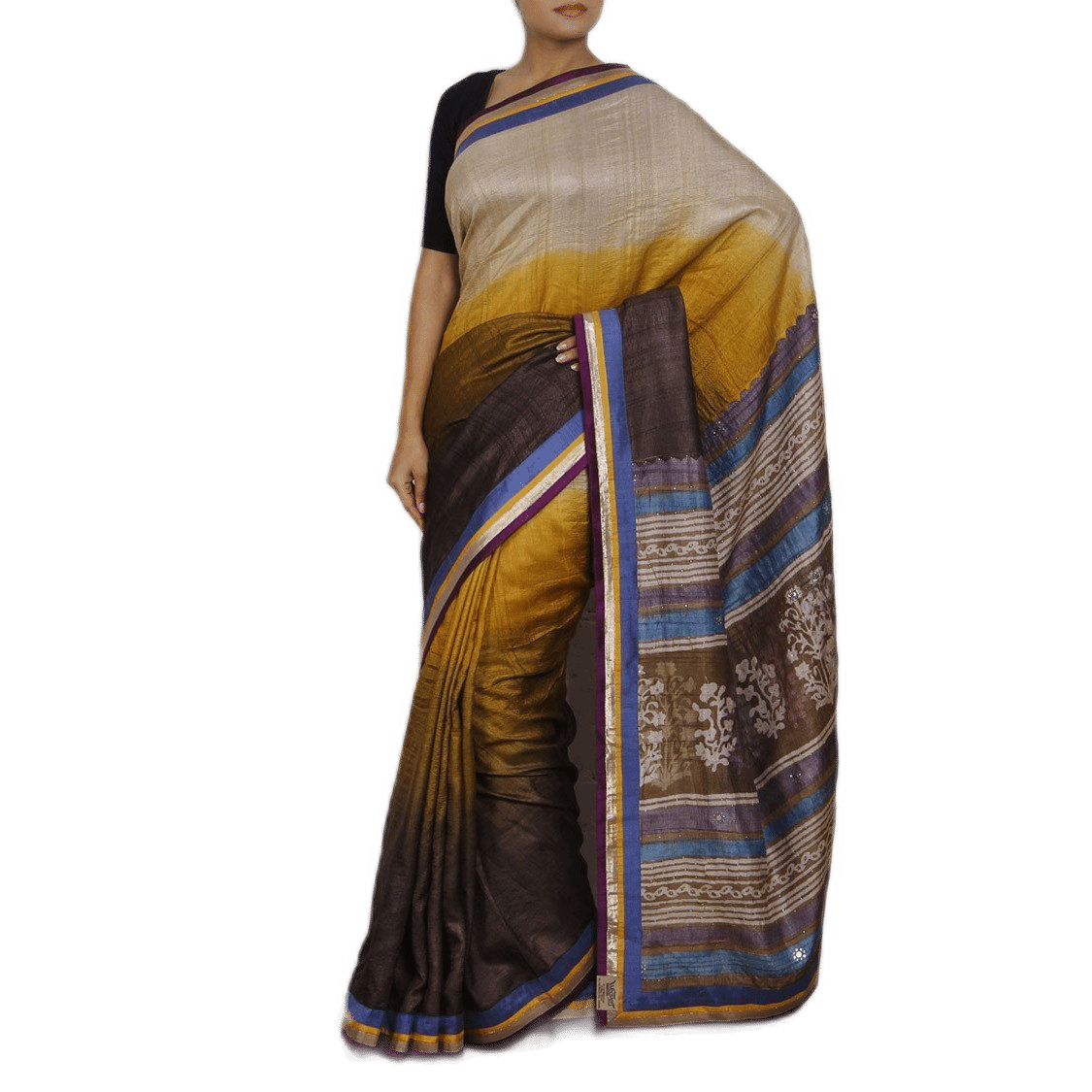 Weavers Studio · Silk SareesBeige & Dark Brown Silk Saree
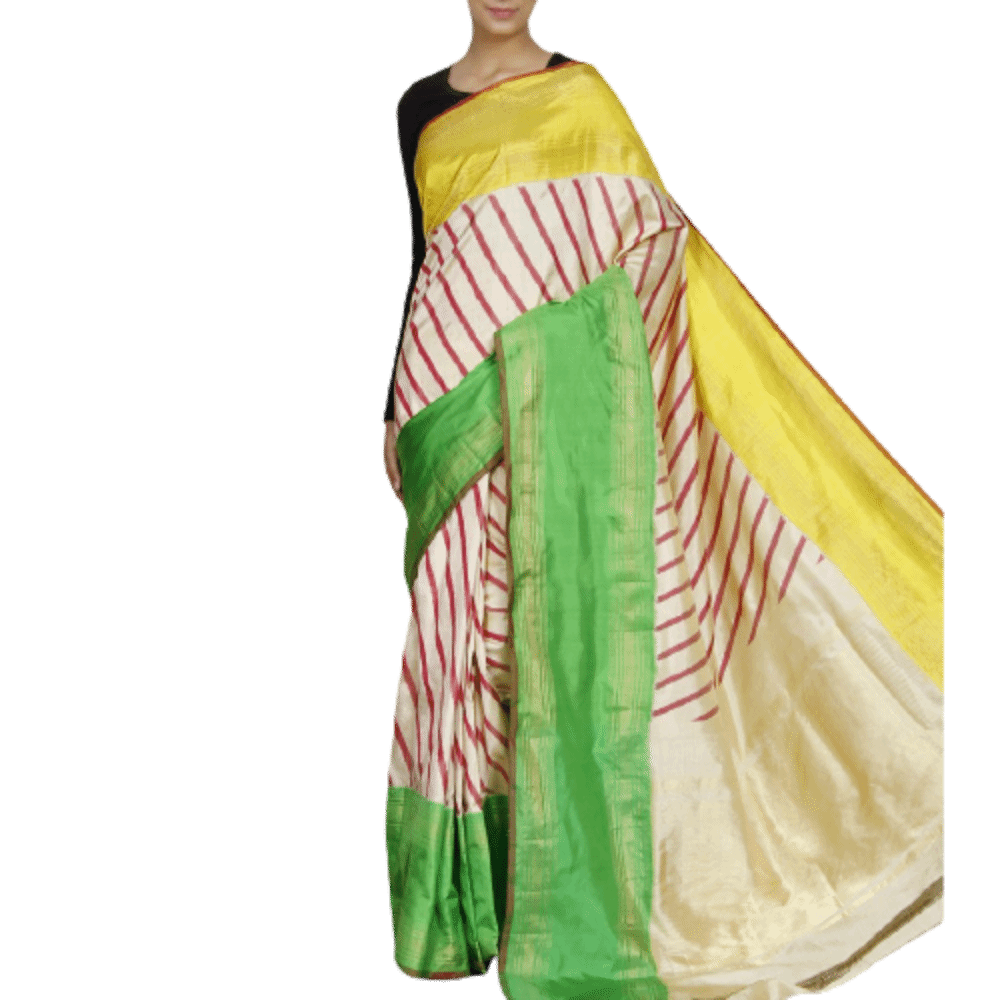 7 Karigar Gali · Silk SareesBeige & Green Handwoven Pochampally Silk Saree
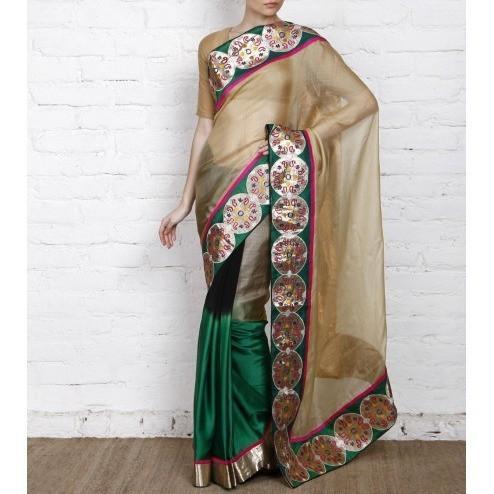 Pretty Women · Silk SareesBeige & Green Kota Silk Saree