
In this guide
Find out which decision belongs to whom
Ask the couple or the person coordinating the wedding party to describe the essential part of the look. They may care about a consistent colour in the ceremony line, a similar border or a range of tones that looks relaxed outdoors. Ask privately whether a particular shade or combination has been reserved for someone else. Do not turn an online opinion about wearing a darker shade of the bride's colour into a universal rule. The people planning this occasion can tell you what matters to them and what has not occurred to them as a concern.
Give the group a short written summary once the answer is clear. For example, the body of each saree can be any deep green, the border may vary and blouses can come from your own wardrobes. This leaves three decisions neatly separated. If matching the fabric itself is essential, say so now, before someone spends money on a piece that matches the colour but not the sheen. Agree who can approve a substitute and when. A person shopping across time zones should not have to wait for a dozen opinions on a purchase that one designated person could confirm.
Build a palette from things you can see together
Whenever possible put actual swatches beside one another. Label them with the seller, fabric description and selected option. Look at them in indirect daylight and under an indoor lamp. Two greens close in one light can separate under another because the surfaces reflect light differently. A colour chosen on a glossy phone screen cannot guarantee an exact match across several textiles. Treat photographs as a way to discuss the direction, not as a contract for identical colour. If the group accepts variation, use that permission deliberately rather than pretending small differences do not exist.
If everyone is shopping remotely, choose a reference that can be shared without misleading filters. Photograph the swatch beside a familiar neutral on the same surface and send the unedited picture. Ask each person to place their candidate next to the reference if a physical sample can travel. If not, ask for the seller's exact colour description and current photographs. Make clear what remains uncertain. A palette with room for olive, forest and moss may survive those uncertainties beautifully. A ceremony designed around one precise emerald might be better served by purchasing the fabric together after checking the terms.
Choose which features can vary
Try keeping one long line consistent and varying smaller areas. The group could share the saree body while choosing individual blouses, or share the border colour while choosing different depths of the main shade. Consider what will actually be visible in the planned arrangement. If everyone wears a pleated pallu across the front, the border and end panel may carry more visual weight than the body colour you spent weeks choosing. Lay a sample over a shoulder before deciding. A folded bolt on a counter will not show the proportions of the finished group.
Ask each wearer about comfort and coverage privately where appropriate. A palette that allows different blouse sleeves, necklines and base layers can produce a more convincing group than a strict uniform that leaves several people uncomfortable. Take existing sarees seriously as candidates. Someone who owns a suitable piece should not be required to replace it merely because the rest are new, unless uniform fabric was clearly agreed from the start. If requirements have changed, discuss the additional cost openly. Do not disguise an expensive new expectation as a tiny adjustment to a colour choice already approved.
Try a group picture before the event
If two or three participants live nearby, have them stand together with samples arranged approximately as worn. Take a picture at the distance of a group portrait. A broad contrast that seemed obvious up close may disappear, while a reflective border may read much brighter than expected. Repeat with people in a different order. Sometimes rearranging adjacent shades creates a more satisfying result than replacing anything. Get consent before sharing pictures of the wearers and keep the discussion about garments and light, not judgments about which person supposedly suits a colour by virtue of their appearance.
If the group cannot meet, build a simple paper layout of colours and write the uncertainty beneath it. Do not spend hours adjusting digital swatches until they seem identical; that can make a rough planning aid look falsely precise. Ask the photographer or coordinator about the likely background if it is known. A line of pale outfits against a pale wall may want a little definition from borders or arrangement, not necessarily darker sarees for everybody. The answer should help the group make fewer purchases, not create another round of compulsory accessories based on a speculative image.
Name the approved shades on the final note without relying on colour alone. Numbered swatches with written descriptions make discussion easier for anyone who sees colours differently or uses a screen with altered settings. Instead of asking whether someone means the darker green, the group can refer to the same numbered example.
Give the plan an end date
Set a final date for colour approval that leaves enough time for dispatch, fitting and blouse work. After approval, record the exact option and any agreed exception. If something sells out, go back to the essential criterion rather than starting the entire conversation again. A different shade within an approved family may need no change from anybody else. If a precise batch is unavailable, find out whether the group prefers a new shared option or an intentionally varied palette. Do not leave the last person to order responsible for solving a supply problem for everyone.
On the day, take a moment to see the people before assessing the colour match. Fabric moves, light changes and the photographs will include flowers, surroundings and expressions as well as sarees. If the essential decisions were communicated clearly, the plan has succeeded even when two borders are not twins. Keep a note of the palette and sources for anyone who wants to wear their piece again without the group. A generous wedding colour scheme leaves room both for the picture made together and for the clothes each person takes home afterward.
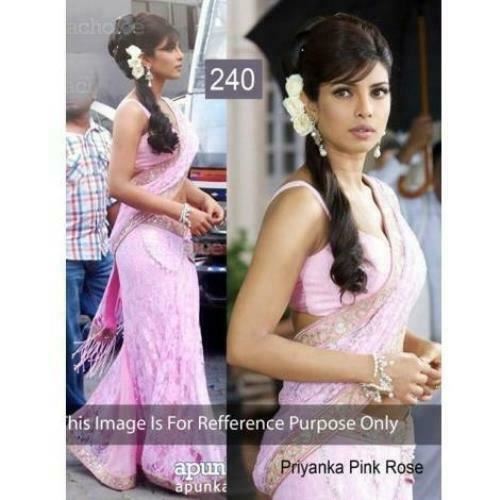 rangoutlet.com · Net SareesRam Chand Punam Chand (RCPC) BOLLYWOOD PRIYANKA PINK ROSE DESIGNER SAREE - Onlin
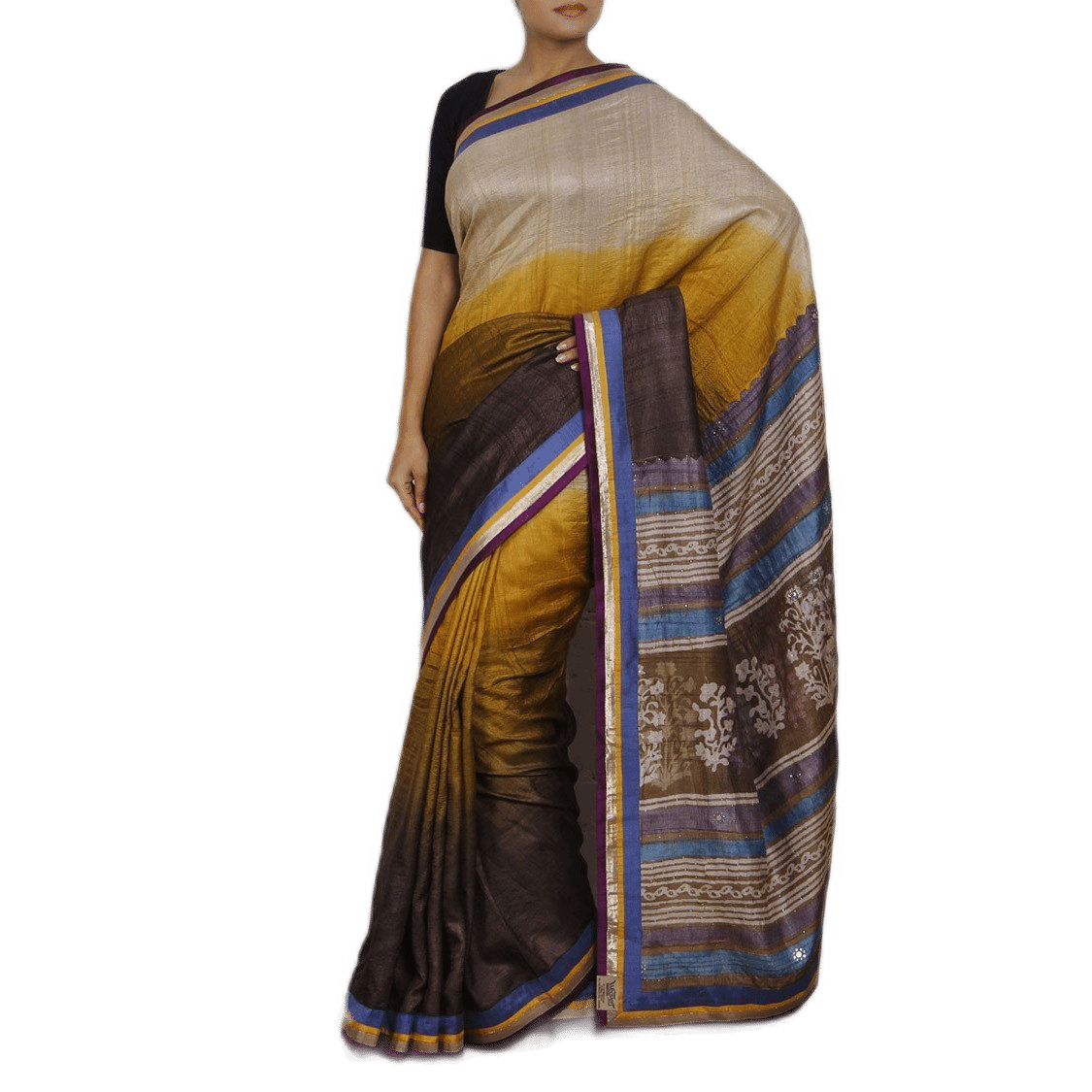 Weavers Studio · Silk SareesBeige & Dark Brown Silk Saree
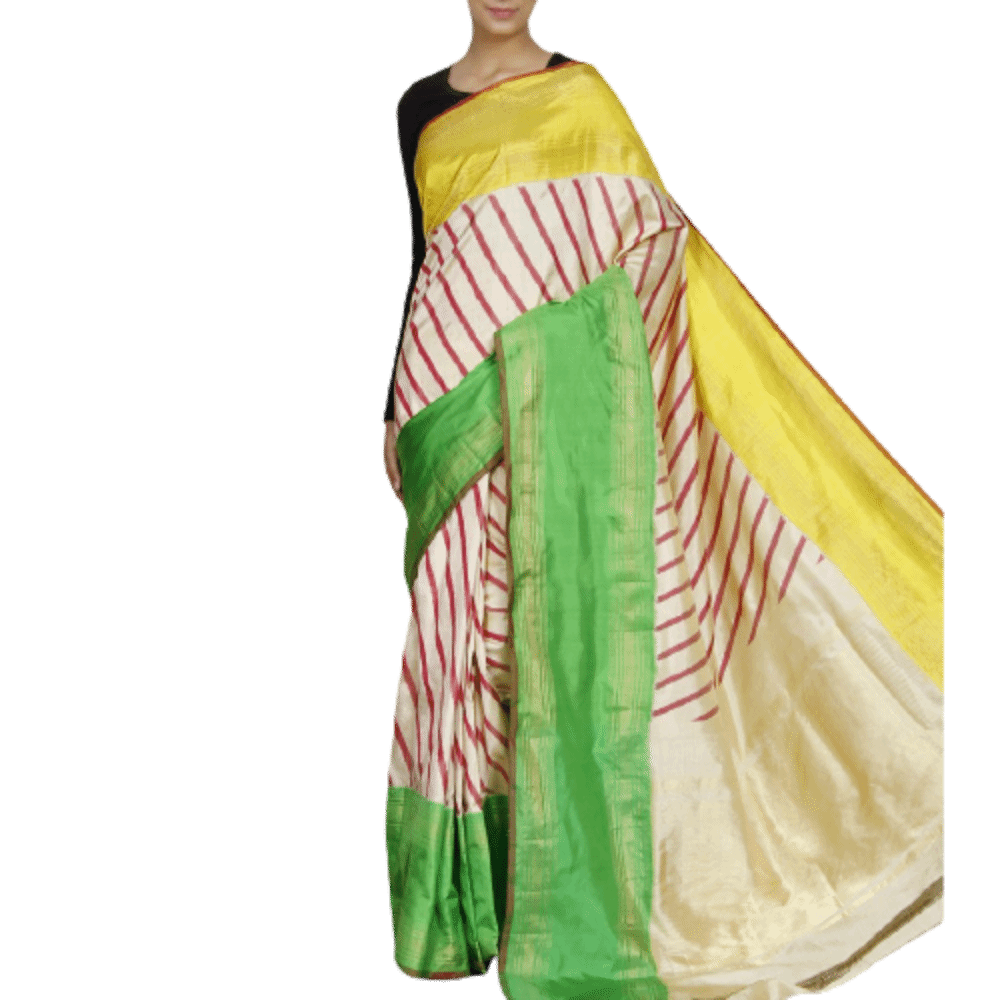 7 Karigar Gali · Silk SareesBeige & Green Handwoven Pochampally Silk Saree
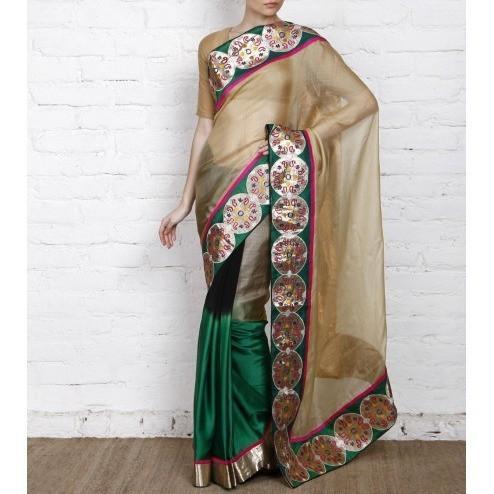 Pretty Women · Silk SareesBeige & Green Kota Silk Saree