
In this guide
Look at the skirt away from its companions
Hang or support the skirt safely against a plain background and put the blouse, dupatta and ceremony jewelry out of sight. Look from several steps away. Is it the brilliant colour, the width of the hem, the density of the decoration or simply the complete matching set that reads as bridal to you? A rich skirt beside a plain blouse may feel entirely different from the same skirt under a heavily bordered veil. If the silhouette alone is what feels too grand, changing earrings will not achieve the effect you want. Name the real issue before spending money on a solution.
Choose the next occasion on its own terms. A family dinner at home, a friend's reception and a formal portrait allow very different degrees of volume. Ask about the hosts' plans when uncertain, especially if the skirt resembles a look central to the celebration. Rewearing does not require making it unrecognisable or pretending it was never special. You are looking for a setting in which you can enjoy its history without feeling as though you are restaging your own ceremony. Sometimes the right answer is to wait for a larger event and wear a different component now.
Reduce the amount of matching surface
Begin with a plain top you already own and try it over the waistband. A short fitted blouse exposes the shape of the skirt, while a longer straight top can cover the densest decoration at the waist. Check where the top ends in relation to the flare. A hem that catches on beading with every step is not a practical pairing, whatever it looks like standing still. If you like the proportion but not the particular top, you now have a useful specification for a purchase: this length, this amount of room and a smoother interior finish.
Pick a colour from a small detail in the skirt rather than automatically matching the ground. A muted leaf colour worked into a border can make a surprisingly calm blouse beside a vivid floral field. Alternatively, use a familiar neutral and let the skirt be the only piece with a story. Stand in normal room light and take one full length picture. Check whether the waistband now looks unfinished because it was designed to sit beneath a particular overlap. A top that covers the join cleanly is generally simpler than adding another ornate belt to conceal it.
Put the dupatta on probation
Try the outfit without the original dupatta if that is comfortable and appropriate for your occasion. The change may be enough. If you would like a layer, borrow a plain one and see how its transparency and edge look beside the skirt. A light wrap with little decoration can leave the skirt visible while reducing the overall sense of ceremony. Check the length against how you intend to carry it. More fabric is not necessarily more useful if you need both hands to keep it from brushing the floor when you sit.
If it is the wedding dupatta you most want to wear, reverse the experiment. Put the skirt away and lay that dupatta over an uncomplicated suit you know well. Notice whether the garment underneath can support its weight without twisting at the neck. The same principle works with the original blouse over a simpler skirt. Rewearing one component still counts. There is no prize for getting all three out of storage at once, and each successful combination gives you another reason to keep the set intact rather than cutting it apart in frustration.
Do the practical test before considering alterations
Dress in the proposed combination and take a seat at a table. Stand up, turn a corner and climb a few steps if you can do so safely. Is the hem the right height with the shoes you will actually wear, or was it fitted around different heels? Does the waist stay comfortable through sitting? A long event is a poor place to discover that a waistband is secure only when you stand still. If the fit has changed, ask a tailor to inspect what can be altered. Do not assume a decorative seam hides generous spare fabric.
A permanent change deserves a separate decision from a styling change. Removing volume, taking off a border or shortening the skirt can affect its balance, the placement of motifs and the possibility of wearing the original ensemble again. Ask a professional to show what would happen with a reversible demonstration where feasible. Get a quote and compare it with the cost and use of a simple companion top instead. If the garment is shared, borrowed or treasured by someone else, discuss the proposal before authorising a cut. A new occasion need not cost you every option for the next one.
Look at the waist fastening from behind as well as from the front. Long decorative ties that disappeared under the wedding dupatta may become the main detail with a plain top. If you like them, give them space; if not, ask about a reversible way to arrange them without cutting the ends.
Decide what to repeat next time
Once you find a combination that works, make a small record while it is still on. Note the top, layer, shoes and jewelry you actually wore, not just the things you laid out first. A photograph will remind you how the proportions worked. A line about what felt heavy after an hour may be even more helpful. If you carried the dupatta over your arm for most of dinner, choose a different way to wear it or leave it behind at a similar occasion. That is useful information, not a failed outfit.
Return the bridal components to suitable storage separately if their weight or decoration requires it, but label them so the original set can be reunited. Keep your successful pairings with the storage note. Next time an invitation comes, you will have a starting point that is neither a brand new purchase nor the exact wedding look. A skirt given a second life does not have to become an everyday basic. It only has to become available again, in a form that feels right to the person wearing it now rather than only to the person in the wedding album.
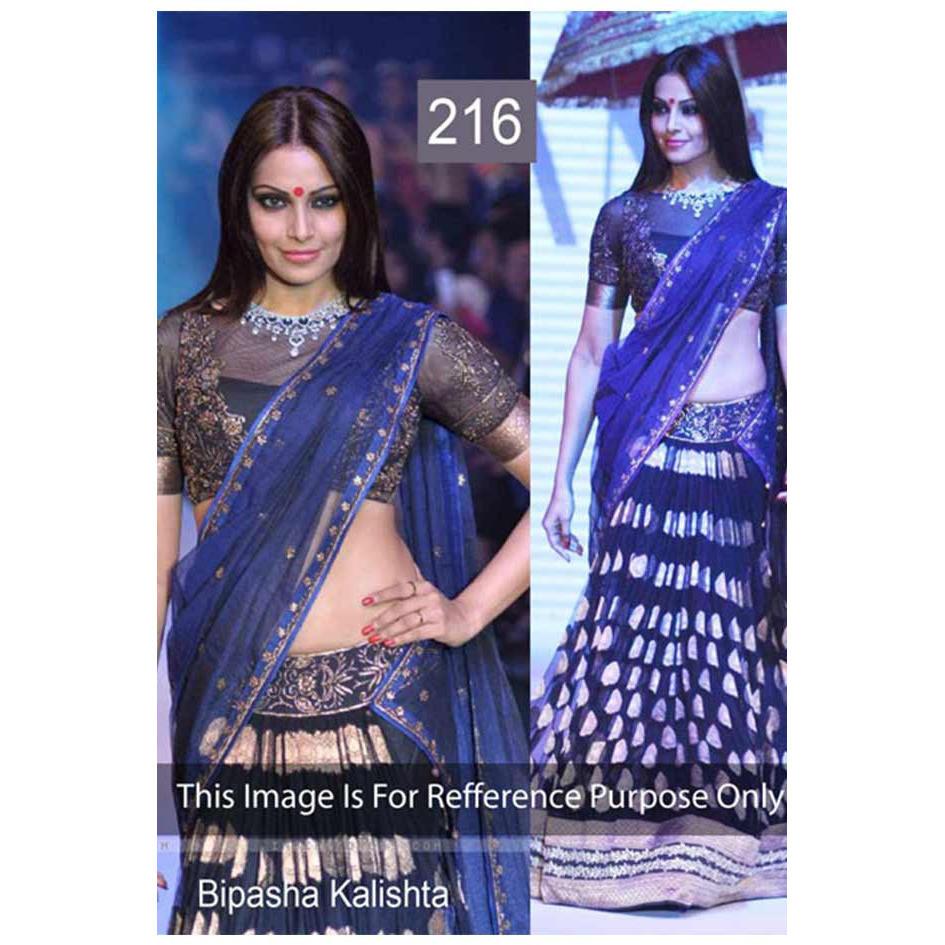 Ram Chand Punam Chand - RCPC · Lehenga CholiGeorgette Blue Lehenga Choli - Bipasha Basu - Ram Chand Punam Chand (RCPC)
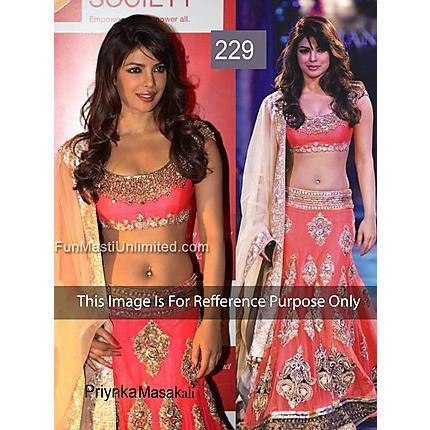 Ram Chand Punam Chand - RCPC · Lehenga CholiGeorgette Red Lehenga Choli - Priyanka Chopra - Ram Chand Punam Chand (RCPC)